Today's Runes for George W. Bush
| The Norn spread is used to plot the crucial elements of past, present, and future, and to reveal the evolution of the situation through the arc of time. Spirit Runes are most commonly used for questions about mysticism, spirituality, and religion. |
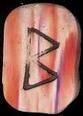
| The left rune represents an important element of the past. Berkana represents the birch tree. The birch is frequently symbolic of renewal, rebirth, birth, growth and fertility. This rune is a joyous one, representing good outcomes from ventures undertaken. It is the rune of the family and of a good household. |
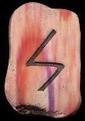
| The middle rune represents a deciding element of the present. Sowelu is a strong symbol, for it represents the sun. Unlike equatorial cultures who may see the sun as a harsh and imperial force capable of causing droughts, in the cold north the sun is a purely feminine force that gives life and allows crops to grow. In dark times, this rune represents clarity of sight and the victory of good over evil. Sowelu is irreversible, as the cycles of the sun and seasons are perpetual. |
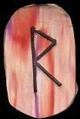
| The right rune represents the critical element of the future. Raido means to ride. In this rune, the image is not so much the riding of a horse as in riding in a cart or as cargo. As such Raido may suggest a journey, but is much more indicative of communication. Alternate interpretations based on the use of Raido as a cognate in other words give it the meaning of council, judgment, and moral correctness. Therefore, this rune is the rune of wise advice and good leadership. |
|
|