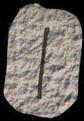
Today's Runes for Moby
| A Single rune is used to gain a quick insight into what drives the situation, or to reduce it to the most concise summary possible. Stone Runes are most commonly used for questions about the natural world and things beyond human control. |
| The rune represents the critical factor in the issue at hand. Isa is the rune symbolizing Ice - cold, stagnant, frozen, and unchanging. This rune suggests heat removed not just from anger or conflict, but from passion as well. Paradoxically, Isa conveys images of slippery slopes and unsure footing, but also of circumstances that have crystallized and become utterly immutable. Remember that in the cold north, ice is not just THE challenge to be overcome, but the very nature of the environment. Be courageous, for you work against this element every day. Will you fight alone or with others against this, our common foe? Is there much worse than lack of change? |
|
|