Today's Runes for Richard Branson
| The Fork spread is used at critical turning points, to understand the dynamics of an important decision. Spirit Runes are most commonly used for questions about mysticism, spirituality, and religion. |
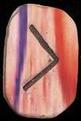
| The left rune represents the first possible outcome. Ken is the rune of light and knowledge. The rune is shown reversed representing a state of darkness or ignorance. Either you are unable to obtain information that you need, or the information is being withheld from you. In darkness there is fear, but remember that darkness does not mean isolation. Friendship and comfort can still be available, although they are not immediately visible. |
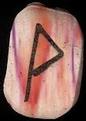
| The right rune represents the second possible outcome. Wunjo is the rune of Joy. Since joy is least frequently a solitary emotion, this rune often represents mutual or communal bliss. Wunjo is also seen as a rune of the gods and a rune of perfection, carrying with it the elation that blazes from the creation of a perfect work - perhaps this is the true joy of the gods, that they can create perfection. That aside, this rune does not focus on the struggle for perfection or on our inevitable imperfections, but rather on a job well done and the satisfaction that comes from it. |
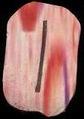
| The bottom rune represents the critical factor that determines what will come to pass. Isa is the rune symbolizing Ice - cold, stagnant, frozen, and unchanging. This rune suggests heat removed not just from anger or conflict, but from passion as well. Paradoxically, Isa conveys images of slippery slopes and unsure footing, but also of circumstances that have crystallized and become utterly immutable. Remember that in the cold north, ice is not just THE challenge to be overcome, but the very nature of the environment. Be courageous, for you work against this element every day. Will you fight alone or with others against this, our common foe? Is there much worse than lack of change? |
|
|