Today's Runes for Ulysses S. Grant
| The Fork spread is used at critical turning points, to understand the dynamics of an important decision. Spirit Runes are most commonly used for questions about mysticism, spirituality, and religion. |
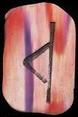
| The left rune represents the first possible outcome. Thurisaz the thorn represents barriers and senseless violence. Here we see the thorn overturned. This could mean that erected barriers will not hold, or that senseless violence can be avoided. Also, remember where thorns are found - perhaps this rune portends that a goal can be obtained easily and without interference. Grasp for the rose... |
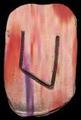
| The right rune represents the second possible outcome. Uruz is the name of the Auroch, an extinct prehistoric ox. This animal was strong and brave, and was the focus of rites of manhood in older days. Reversed, this rune symbolizes either the lack of challenge, or the lack of preparation for a challenge. This rune suggests that you must reach deep within in order to gain the power you will need, whether to get out of your current rut, or to face what appears to be a hopeless situation. |
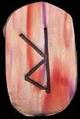
| The bottom rune represents the critical factor that determines what will come to pass. Raido is the rune of riding, as in a cart or as cargo. It is seen here reversed, suggesting a disruption of travel or communication. Etiological analysis of this rune has also given it interpretations of advice or justice, and of being in a position of moral correctness. Reversed, there is an indication of the lack of solid council, or the holding of a position that is not morally sound. |
|
|