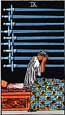
| The Hagall spread is a tool for revealing the path of spiritual growth in difficult situations. It is a favorite of mystics and those confronting a major life challenge. The Rider Waite Tarot is the most widely recognized Tarot deck, and the first deck published in the 20th century. It was created by members of the Hermetic Order of the Golden Dawn, and is especially suited to questions of a mystical nature. If you would like your own copy of the Rider Waite Tarot, you can buy it now! |
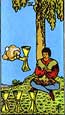
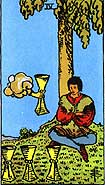 | The card in the middle of the circle represents the core or central issue of the situation. Four of Cups (Luxury): Being surrounded by love and devotion but taking it for granted. Ignoring the real and longing for the indefinable. Apathy and disengagement from the world. Dissatisfaction with the condition and direction of affairs, but the inability to accept new opportunities. |
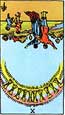
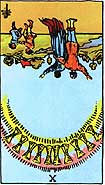 | The card at the bottom of the circle represents something you did to bring the situation about. Ten of Cups (Satiety), when reversed: Dissipation, debauchery, and stagnation. Taking one's good fortune for granted. Problems in domestic and social matters. A false love or infatuation, leading to a lack of fulfillment. |
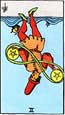
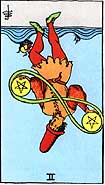 | The card at the bottom left of the circle represents your beliefs, impressions, or expectations. Two of Pentacles (Change), when reversed: Imbalance and disharmony as a result of upheaval and transformation. Taking one step forward for every two steps back. Chaos caused by the shifting importance of projects and priorities. Industrious yet unreliable actions. Furious activity producing negligible results. |
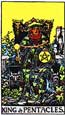
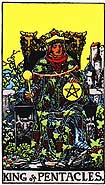 | The card at the bottom right of the circle represents the most likely outcome of the situation given present circumstances. King of Pentacles: The essence of earth behaving as air, such as a diamond: A true businessman, with a gift for identifying opportunities and taking advantage of them. A person well informed about the world, skilled in all things physical, and eager to encourage others. A pillar of practicality and dependability, embracing tried and tested methods, and possessing an innate understanding of the material reality. A philanthropist and devotee of both luxury and hard work, whose word is as good as gold. |
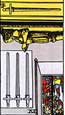
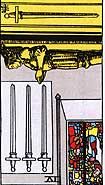 | The card at the upper left of the circle represents the spiritual history of the situation the things you've learned. Four of Swords (Truce), when reversed: Restlessness and mental disharmony. Deserting a struggle in progress. A temporary retreat from stress that turns into a permanent rout. A lack of vigilance that could lead to disaster. |
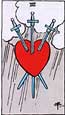
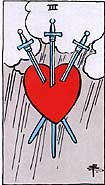 | The card at the top of the circle represents the spiritual tasks and challenges of the present situation. Three of Swords (Sorrow): Unsettling news leading to heartbreak or loneliness. Tactless or hurtful words. Acting without consideration for the emotions of others. Betrayal of trust or confidence. The revelation of a painful truth. |
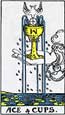
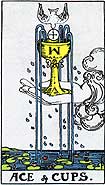 | The card at the upper right of the circle represents the metamorphosis of the spiritual situation, and how your knowledge will evolve. Ace of Cups: The seed of a new relationship or spiritual journey - perhaps as yet unseen. An opportunity for joy, contentment, fertility, or enlightenment. Coming to understand the emotional needs of those around you. May represent an unexpected message, a chance meeting, or the start of a friendship or romance. |
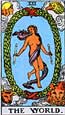
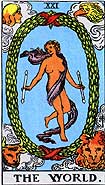 | The card at the left of the lower line represents the person or qualities that will sustain your spiritual journey. The World: Completeness and intricacy of design. A great work. Achievement, reward, and well-earned recognition. A time of success, prosperity, security and joy. May also indicate travel or a change in residence. |
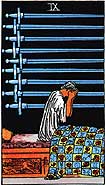 | The card in the middle of the lower line represents the qualities that you express in this circumstance. Nine of Swords (Cruelty): Debilitating mental anguish or ill health. Being dragged down by the dishonor of others. Participation in a shameful or regrettable act. Inescapable guilt, mistrust, and doubt. May indicate a death or other catastrophic loss. |
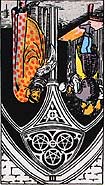 | The card at the right of the lower line represents the person or qualities that will reveal spiritual knowledge. Three of Pentacles (Works), when reversed: Delays in the commencement of business, commercial transactions, or employment. Holding back or failing to use one's abilities to their full potential. Shoddy workmanship and lack of attention to detail. Being hamstrung by convention, or failing to temper artistic fancy with an understanding of reality. |