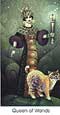
| The Fourfold Vision spread offers a progression of different ways of looking at an object, person, or situation. It is a powerful tool for gaining deeper insight into the specific subjects of other readings. The Cat People Tarot paints a picture of faraway lands trod by mystical archetypes and their feline companions. This deck is a perfect tool for dreamers and idealists, and is a great choice for divining the nature of human imagination. If you would like your own copy of the Cat People Tarot, you can buy it now! |
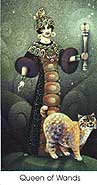 | The card on the far right represents the object being viewed, be it an idea, relationship, or the self. Queen of Wands: A sympathetic and understanding person. Friendly, loving, honorable and chaste person. Practicality. Feminine charm and grace. Capacity for meaningful expression and love. Gracious hostess. Sincere interest in others. |
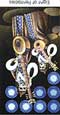
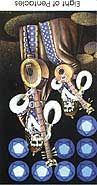 | The card second from the right represents the physical vision: how the object is seen at a base or mechanical level. Eight of Pentacles (Prudence), when reversed: Lack of ambition. Vanity. Conceit. Disillusionment, Usury. Hypocrisy. Flattery. Intrigue. |
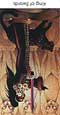
 | The card in the middle represents the mental vision: the object personified and seen through a humanized perspective. King of Swords, when reversed: A person who may pursue a matter to ruin. Cruelty. Conflict. Selfishness. Sadism. A dangerous or wicked person. One who causes unnecessary disturbance and sadness. Perversity. |
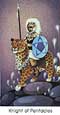
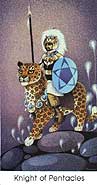 | The card second from the left represents the emotional vision: how passions and values are creatively stimulated by the mental vision. Knight of Pentacles: A mature and responsible person. Reliability. Methodical and patient person. Persistence. Ability to conclude a task. Laborious, organized, capable and dependable person. |
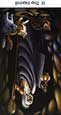
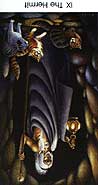 | The card on the far left represents the fourfold or mystical vision: still viewing through the previous three, we now add a spiritual element, revealing unseen aspects of the object. The Hermit, when reversed: Imprudence. Hastiness. Rashness. Prematurely. Foolish acts. Incorrect advice. failure resulting from inactivity. Overprudence resulting in unnecessary delay. Immaturity. Excessive isolation. |