Today's Tarot for Christina Aguilera
| The Creative Process spread is designed specifically to peer into the nature of a project or creative undertaking, and shine a spotlight on the evolution of its parts. The Palladini Tarot was created to "bridge the ancient and the future", using elements of Medieval, Egyptian and modern art. It is one of the most popular decks among new students of Tarot. If you would like your own copy of the Palladini Tarot, you can buy it now! |
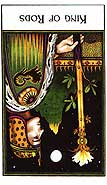 | The card in the middle represents the creative force behind the project, be it a person, organization, or other entity. King of Rods, when reversed: The dark essence of fire behaving as air, such as lightning: An exciting and reckless leader who inspires others to irresponsible acts. An artist whose depraved love of chaos causes him to take hold of destructive ideas and make them appealing to the masses. One who is charismatic and intimidating, using demonstrations of his own skill to dupe others into accepting responsibilities beyond their ability. A dashing and magnetic personality, appearing and disappearing with great suddenness, and leaving upheaval in his wake. |
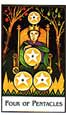
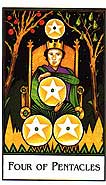 | The card on the top represents imagination - the prophetic image that stems from the creative force of the previous card to initiate the project. This is the poetry or voice of the undertaking. Four of Pentacles (Power): Cleaving to earthly power in the desperate fear that it will be lost. Making yourself an obstacle to progress due to lack of originality and a desperate fear of change. Believing that security and identity are based primarily on the possession of material things. Coveting things and people. Living in a cloud of suspicion and prejudice. |
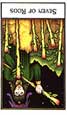
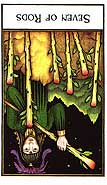 | The card on the left represents emotion - the feelings aroused by or surrounding the ideation of the project that takes place in the previous card. This is the music or scent of the undertaking. Seven of Rods (Valor), when reversed: Failure to stand up for your beliefs in the face of a hostile majority. A self-fulfilling fear of failure or embarrassment. Great challenges met with cowardice. Quarrels, perplexity, and indecision at a crucial moment. |
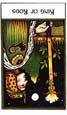
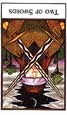
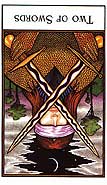 | The card on the bottom represents thought - the analytical process of organizing the project and capturing the emotional content of the previous card. This is the science or vision of the undertaking. Two of Swords (Peace), when reversed: Indecision due to contradictory characteristics brought together. Tension in the aftermath of a quarrel that has been resolved. Scheming, abuse of trust, and agreements made in bad faith. Allowing the mind to block off the emotions. Self deception as a means of justifying cruel acts. |
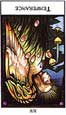
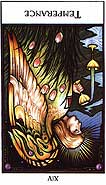 | The card on the right represents manifestation - the real work involved in completing the project, and the form it will take upon culmination. This is the painting or touch of the undertaking. Temperance, when reversed: Lack of restraint and self-control. Losing one's cool. Energies dispersed through conflicts in personal, business, and spiritual matters. |
|
|