Today's Tarot for Cindy Crawford
| The Cross and Triangle spread is a powerful means of understanding complex situations, developed by the Hermetic Order of the Golden Dawn. This spread is rich in occult and mystical symbolism, and one of our favorites here at Facade. The Benedetti Tarot is a highly stylized deck painted on gold leaf. 7 years in the making, the images were inspired by the Visconti Tarot, the earliest Tarot deck still in existence. The Benedetti Tarot is the favorite deck of those who seek simplicity and elegance in their lives. |
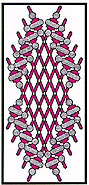 | The first card, the significator, is placed in the center of the cross. This card represents the prime energy manifest in your life. Ten of Wands (Oppression): Success and gain, leading you to take on a burden greater than you can carry. Noble leadership transformed, through lack of restraint, into tyranny. The crushing weight of ultimate responsibility. Having spent their fuel, the engines of creation grind to a halt. |
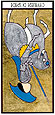
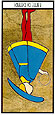
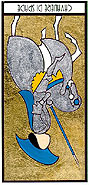 | The second card, placed above the significator, represents Air. It describes your spirit, process of thought, and the influence of reason. Knight of Swords, when reversed: The dark essence of air behaving as fire, such as a tornado: A merciless and skillful warrior, unfettered by emotion or conscience. A nihilist who can refuse not even the most insurmountable of challenges. A person who inspires fear and hate through their domineering nature and the power of their presence. Speaking without tact or tolerance, in a sarcastic manner. May portend the swift initiation or conclusion of conflict, through the calamitous invocation of force. |
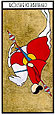
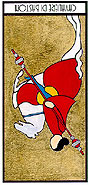 | The third card, placed to the right of the significator, represents Fire. It describes your motivations, creative energies, and the influence of passion. Knight of Wands, when reversed: The dark essence of fire, such as a great conflagration: One filled with vitality and limitless appetite. A sexy and exciting person, obsessed with style and outward appearance, overconfident in their abilities, and foolhardy in their actions. A hot temper and domineering nature, coupled with a love of false drama and all things theatrical. Anxiety over remaining in one place or with one person for too long. The rapid approach, or more likely departure, of someone or something that ruptures your world. Often suggests travel as the result of discord, or cruel indifference. |
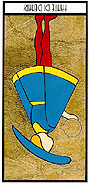 | The fourth card, placed below the significator, represents Water. It describes your emotions, meditations, and the influence of love. Page of Pentacles, when reversed: The dark essence of earth, such as a chasm: Unfavorable news about business, finance, or the physical world. One who delights in all forms of luxury and physical excess, leaving practical matters unattended. Irrationality and failure to recognize obvious facts, coupled with a poor work ethic. Wastefulness, lack of focus, and loss. May portend the loss of a job or promotion. |
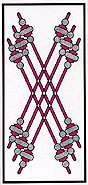 | The fifth card, placed to the left of the significator represents Earth. It describes your physical presence, position in life, and the influence of the material world. Six of Wands (Victory), when reversed: Arrogance and dangerous overconfidence as the result of a past success. Impudence and false pride in meaningless achievements. Fear of failure coupled with false hopes. Frustration over indefinite delays and motion without progress. |
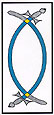
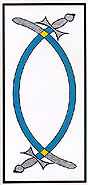 | At this point the cross is complete and the triangle is formed. The sixth card, placed on the bottom left of the triangle represents one of two opposing forces. Two of Swords (Peace), when reversed: Indecision due to contradictory characteristics brought together. Tension in the aftermath of a quarrel that has been resolved. Scheming, abuse of trust, and agreements made in bad faith. Allowing the mind to block off the emotions. Self deception as a means of justifying cruel acts. |
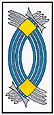
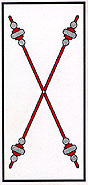 | The seventh card, placed on the bottom right of the triangle represents the force that opposes the bottom left card. These forces may be external, but they are frequently one's own inner archetypes in conflict. Two of Wands (Dominion): Established power and influence over others. Setting goals and a vision for the future. Coming to grips with the impact of past decisions, considering the current state of affairs, and developing a plan of action. Responsible leadership. |
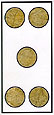
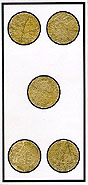 | The eighth card, the reconciler, is placed below the cross in the third vertex of the triangle. This is the force that will resolve the conflict between the bottom left and bottom right cards. By meditating on this force and bringing more of it into your life, you can bring the matter at hand to a swifter conclusion than would naturally occur. Five of Pentacles (Worry): Hard times brought on by addiction, wasteful spending, ill health, or an outside event. Rejection, loneliness, and the need for comfort. May suggest unemployment, a catastrophe in personal finance, or a turn for the worse in business. |
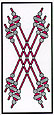
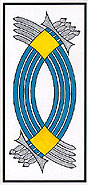 | The ninth and final card, placed in the center bottom of the triangle, represents the final outcome unless you change course. Eight of Swords (Interference), when reversed: Learning a valuable lesson from the unexpected consequences of prior decisions. Narrowly escaping criticism, censure, and the imposition of external restrictions. Focusing on the crux of a problem and freeing oneself from a difficult situation. Coming to grips with a past failure or humiliation and moving on. |
|
|