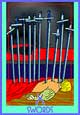
| The Celtic Cross spread is one of the most popular Tarot spreads, providing varied insight into many aspects of a complex situation and your role in it. The Colman Smith Tarot is a modern reinvention of the classic Rider Waite deck, infusing the original line drawings by Pamela Colman Smith with colors drawn from the psychedelic digital age. |
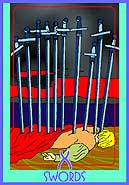
 | The card not shown but at the center of the cross, represents the atmosphere surrounding the central issue. Ace of Cups: The seed of a new relationship or spiritual journey - perhaps as yet unseen. An opportunity for joy, contentment, fertility, or enlightenment. Coming to understand the emotional needs of those around you. May represent an unexpected message, a chance meeting, or the start of a friendship or romance. |
 | The card visible at the center of the cross represents the obstacle that stands in your way - it may even be something that sounds good but is not actually to your benefit. Ten of Cups (Satiety), when reversed: Dissipation, debauchery, and stagnation. Taking one's good fortune for granted. Problems in domestic and social matters. A false love or infatuation, leading to a lack of fulfillment. |
 | The card at the top of the cross represents your goal, or the best you can achieve without a dramatic change of priorities. Knight of Pentacles, when reversed: The essence of earth behaving as fire, such as molten magma: One slow to action, even in the most urgent circumstances. A force of nature that cannot be diverted from the wrong path. The voice of duty and honor utterly divorced from reality. Lack of imagination and the complete unwillingness to try a different approach, even if the face of complete failure. Idleness and stagnation. |
 | The card at the bottom of the cross represents the foundation on which the situation is based. Queen of Cups: The essence of water, such as a deep and placid lake: Spirituality, maturity, and grace. A natural counselor and healer, One whose relaxed presence seems to embody deep love and spirituality. A tranquil poet who reflects the nature of the observer. The embrace of all things dreamlike and receptive, such as perfect and unconditional love. |
 | The card at the left of the cross represents a passing influence or something to be released. Four of Wands (Completion), when reversed: Squandering a great and hard won victory through decadence and laziness. Failing to reward those truly responsible for an achievement. Using past accomplishments as an excuse to ignore current problems. Abandoning the very qualities that brought about initial success. |
 | The card at the right of the cross represents an approaching influence or something to be embraced. The Hanged Man, when reversed: Life in suspension. Selfish, materialistic, and untrusting attitudes. Unwillingness to make necessary sacrifices. Going along with the crowd, and refusing to hear the inner voice. Concessions and appeasements that backfire. |
 | The card at the base of the staff represents your role or attitude. Temperance, when reversed: Lack of restraint and self-control. Losing one's cool. Energies dispersed through conflicts in personal, business, and spiritual matters. |
 | The card second from the bottom of the staff represents your environment and the people you are interacting with. Ten of Pentacles (Wealth): Completion of material prosperity and riches. Freedom from financial anxiety, the security of home, and the enjoyment of family. The passing of inheritance along to children, or the gaining of inheritance from parents. |
 | The card second from the top of the staff represents your hopes, fears, or an unexpected element that will come into play. Two of Pentacles (Change): Balance and harmony achieved in a time of upheaval and transformation. Taking two steps forward for every one step back. Shifting the importance of projects and priorities to keep everything on track. A change in occupation or location. |
 | The card at the top of the staff represents the ultimate outcome should you continue on this course. Eight of Swords (Interference), when reversed: Learning a valuable lesson from the unexpected consequences of prior decisions. Narrowly escaping criticism, censure, and the imposition of external restrictions. Focusing on the crux of a problem and freeing oneself from a difficult situation. Coming to grips with a past failure or humiliation and moving on. |