Today's Tarot for H. P. Lovecraft
| The Twisting Path spread provides insight into the path ahead of you and the choices you must make. This is the spread for situations where more than one pitfall may lie ahead. The Benedetti Tarot is a highly stylized deck painted on gold leaf. 7 years in the making, the images were inspired by the Visconti Tarot, the earliest Tarot deck still in existence. The Benedetti Tarot is the favorite deck of those who seek simplicity and elegance in their lives. |
 | The card at the lower left, represents the first decision along your path. Nine of Swords (Cruelty), when reversed: Mental anguish or ill health endured and overcome. Refusal to be dragged down by the dishonor of others. Attempting to avert a shameful or regrettable act. Faithfulness, patience and unselfishness. May indicate the narrow avoidance of a death or other catastrophic loss. |
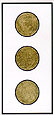
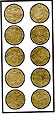
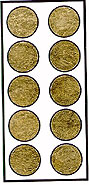 | The card to the far left represents the first false path that may lead you astray. Ten of Pentacles (Wealth): Completion of material prosperity and riches. Freedom from financial anxiety, the security of home, and the enjoyment of family. The passing of inheritance along to children, or the gaining of inheritance from parents. |
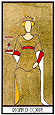
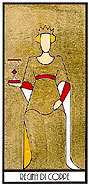 | The card in the middle represents the second decision along your path. Queen of Cups: The essence of water, such as a deep and placid lake: Spirituality, maturity, and grace. A natural counselor and healer, One whose relaxed presence seems to embody deep love and spirituality. A tranquil poet who reflects the nature of the observer. The embrace of all things dreamlike and receptive, such as perfect and unconditional love. |
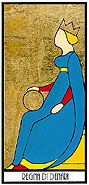 | The card at the lower right represents the second false path that may lead you astray. Queen of Pentacles: The essence of earth behaving as water, such as a hot spring: A warm and generous host, providing shelter and comfort for all who would seek it. A person steadfast, practical, and domestic, able to create opulence and stability in any setting. The qualities of maturity and sensibility, coupled with an innate appreciation for nature and the material world. |
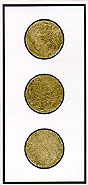 | The card at the top represents one possible mask of your true destination. Three of Pentacles (Works), when reversed: Delays in the commencement of business, commercial transactions, or employment. Holding back or failing to use one's abilities to their full potential. Shoddy workmanship and lack of attention to detail. Being hamstrung by convention, or failing to temper artistic fancy with an understanding of reality. |
|
|