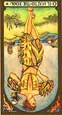
| The Celtic Cross spread is one of the most popular Tarot spreads, providing varied insight into many aspects of a complex situation and your role in it. The International Icon Tarot renders traditional occult symbolism in Swiss iconography. It is a humorous and direct approach to divination, and one of our favorite new decks. If you would like your own copy of the International Icon Tarot, you can buy it now!
|
 | The card not shown but at the center of the cross, represents the atmosphere surrounding the central issue. The Emperor, when reversed: Weakness in character leading to tyranny and abuse of worldly power. Loss of confidence and ambition, coupled with the cold execution of the unthinkable. The inability to carry out plans or command respect. Being unreasonable and prone to fits of rage. A deceiver or demagogue. |
 | The card visible at the center of the cross represents the obstacle that stands in your way - it may even be something that sounds good but is not actually to your benefit. The Empress: The essence of femininity and matriarchy. Creativity, productivity, and the foundation of civilization. Initiative and practical actions that promote prosperity, comfort and luxury. Fruitfulness and motherhood. |
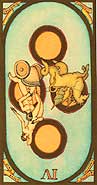
 | The card at the top of the cross represents your goal, or the best you can achieve without a dramatic change of priorities. Two of Swords (Peace): Contradictory characteristics brought together as a means of resolving a conflict. Refusing to be ruled by negative emotions. Strife brought to a close through clarity of mind and restraint of force. Turning a blind eye to the minor infractions of others. |
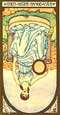
 | The card at the bottom of the cross represents the foundation on which the situation is based. The Hierophant, when reversed: Authoritarianism. Inflexible and dogmatic thinking. A calcified old regime. Bad or incompetent advice. Inability to hear a higher or inner voice, or pretending to hear it for personal gain. |
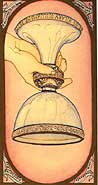
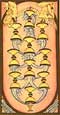
 | The card at the left of the cross represents a passing influence or something to be released. Nine of Cups (Happiness), when reversed: Vanity, conceit, and smugness in romance, friendship, or other relationships. Achieving what you always thought you wanted. Overindulging in food, drink, or the pleasures of the flesh. A state of joy and abundance that is shallow and fleeting. |
 | The card at the right of the cross represents an approaching influence or something to be embraced. Death, when reversed: Stagnation or petrifaction. The refusal to let go of the past. Resistance to change because of fear. |
 | The card at the base of the staff represents your role or attitude. King of Swords: The essence of air, such as a clear blue sky: A mature leader of unwavering ethics and indisputable authority. An incorruptible judge, whose devotion to the law cannot be swayed by emotion or material concerns. Perfect clarity of thought, directness of action, and eloquence of speech. One who, like a great general, inspires not love or devotion, but absolute trust and loyalty. |
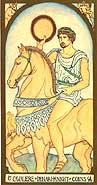
 | The card second from the bottom of the staff represents your environment and the people you are interacting with. Page of Pentacles: The essence of earth, such as a mountain: The surprising appearance of new prosperity and opportunities for advance in the physical world. One who delights in the pleasures of the body, material things, and nature. The embrace of hard work, realistic goals, and scholarly perseverance as a means to create solid achievement. Dependability, trust, and a studious nature. May portend a new job or promotion. |
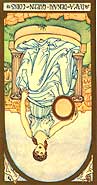
 | The card second from the top of the staff represents your hopes, fears, or an unexpected element that will come into play. Justice: The achievement of balance and inner harmony after a great trial. Agreements, contracts, or treaties concluded justly. Things set to rights. Karma restored. A turn for the better in legal matters. |
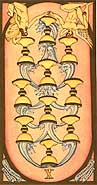
 | The card at the top of the staff represents the ultimate outcome should you continue on this course. Ten of Cups (Satiety), when reversed: Dissipation, debauchery, and stagnation. Taking one's good fortune for granted. Problems in domestic and social matters. A false love or infatuation, leading to a lack of fulfillment. |