| The Hagall spread is a tool for revealing the path of spiritual growth in difficult situations. It is a favorite of mystics and those confronting a major life challenge. The images of the Minchiate Tarot are drawn from a rare surviving 18th century deck of 97 cards - 19 more than the traditional Tarot. It is considered by many to be the single most powerful divination tool on the web, providing deep insight, rich in ancient symbolism, to any question you may pose. If you would like your own copy of the Minchiate Tarot, you can buy it now!
|
 | The card in the middle of the circle represents the core or central issue of the situation. The Lovers, when reversed: Inner strife, frustration, suspicion, and disagreements in a relationship. Irresponsibility and indecision. Avoiding true intimacy in favor of lust. Unfaithfulness. |
 | The card at the bottom of the circle represents something you did to bring the situation about. Temperance, when reversed: Lack of restraint and self-control. Losing one's cool. Energies dispersed through conflicts in personal, business, and spiritual matters. |
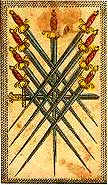 | The card at the bottom left of the circle represents your beliefs, impressions, or expectations. Ten of Swords (Ruin): Crushing defeat brought about by idle intellectualism divorced from reality. Sadness and desolation in the aftermath of a catastrophic and total collapse. A decisive conclusion brought about through the swift and merciless application of overwhelming force. |
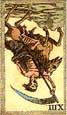
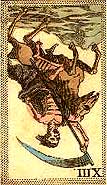 | The card at the bottom right of the circle represents the most likely outcome of the situation given present circumstances. Death, when reversed: Stagnation or petrifaction. The refusal to let go of the past. Resistance to change because of fear. |
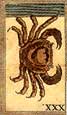
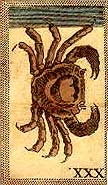 | The card at the upper left of the circle represents the spiritual history of the situation the things you've learned. Cancer, when reversed: Moodiness and passive aggression, easily triggered by obsessive territoriality. Behaving in an overemotional and clingy fashion. Inability to let go of people and things. |
 | The card at the top of the circle represents the spiritual tasks and challenges of the present situation. Knight of Swords, when reversed: The dark essence of air behaving as fire, such as a tornado: A merciless and skillful warrior, unfettered by emotion or conscience. A nihilist who can refuse not even the most insurmountable of challenges. A person who inspires fear and hate through their domineering nature and the power of their presence. Speaking without tact or tolerance, in a sarcastic manner. May portend the swift initiation or conclusion of conflict, through the calamitous invocation of force. |
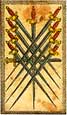
 | The card at the upper right of the circle represents the metamorphosis of the spiritual situation, and how your knowledge will evolve. Two of Swords (Peace), when reversed: Indecision due to contradictory characteristics brought together. Tension in the aftermath of a quarrel that has been resolved. Scheming, abuse of trust, and agreements made in bad faith. Allowing the mind to block off the emotions. Self deception as a means of justifying cruel acts. |
 | The card at the left of the lower line represents the person or qualities that will sustain your spiritual journey. Nine of Cups (Happiness), when reversed: Vanity, conceit, and smugness in romance, friendship, or other relationships. Achieving what you always thought you wanted. Overindulging in food, drink, or the pleasures of the flesh. A state of joy and abundance that is shallow and fleeting. |
 | The card in the middle of the lower line represents the qualities that you express in this circumstance. Libra: Refinement and sophistication, abundant in urbane charm. A gift for diplomacy and social interaction. A romantic, filled with idealism and love of peace. The ability to understand both sides of an argument. |
 | The card at the right of the lower line represents the person or qualities that will reveal spiritual knowledge. Strength, when reversed: Weakness in the face of obstacles and adversity. Tremendous power released at the wrong moment. Inability to defend oneself. Confusion, and lack of preparedness. Illness, hardship, distress and the failing of physical force. Dominant behavior, abusiveness and a possible loss of reputation. |