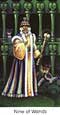
| The Fourfold Vision spread offers a progression of different ways of looking at an object, person, or situation. It is a powerful tool for gaining deeper insight into the specific subjects of other readings. The Cat People Tarot paints a picture of faraway lands trod by mystical archetypes and their feline companions. This deck is a perfect tool for dreamers and idealists, and is a great choice for divining the nature of human imagination. If you would like your own copy of the Cat People Tarot, you can buy it now! |
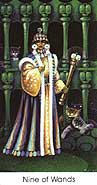 | The card on the far right represents the object being viewed, be it an idea, relationship, or the self. Nine of Wands (Strength): Expectation of difficulties and changes. Awaiting tribulation. Anticipation. Hidden enemies. Discipline. Order. A pause in a current struggle. |
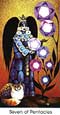
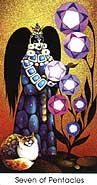 | The card second from the right represents the physical vision: how the object is seen at a base or mechanical level. Seven of Pentacles (Assessment): Ingenuity. Growth. hard work. Progress. Successful dealings. Money. Wealth. Treasure. Gain. |
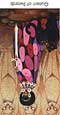
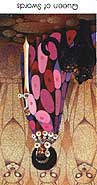 | The card in the middle represents the mental vision: the object personified and seen through a humanized perspective. Queen of Swords, when reversed: Narrow-minded. Maliciousness. Bigotry. Deceitfulness. Vengefulness. Prudishness. A treacherous enemy. An ill-tempered person. |
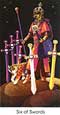
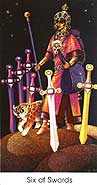 | The card second from the left represents the emotional vision: how passions and values are creatively stimulated by the mental vision. Six of Swords (Science): A trip or journey. Travel. Headstrong attempt to overcome difficulties. Expedient manner. Success after anxiety. |
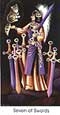
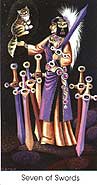 | The card on the far left represents the fourfold or mystical vision: still viewing through the previous three, we now add a spiritual element, revealing unseen aspects of the object. Seven of Swords (Futility): New plans. Wishes. Fortitude. Perseverance. Hope. Confidence. Fantasy. Design. |