| The Hagall spread is a tool for revealing the path of spiritual growth in difficult situations. It is a favorite of mystics and those confronting a major life challenge. The Voodoo Tarot of New Orleans is a deck rich in primal spirituality. It draws on images from the religion Santeria, which weaves Catholic and African beliefs into a vibrant tapestry. This exceptional deck is most often used to ask questions regarding the joy, fury, and spirituality in everyday life. If you would like your own copy of the Voodoo Tarot of New Orleans, you can buy it now! |
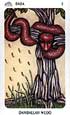
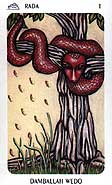 | The card in the middle of the circle represents the core or central issue of the situation. Damballah Wedo (Ace of Swords): The seed of victory - perhaps as yet unseen. A challenge to be met and solved through the invocation of force. An opportunity to bring reason and intelligence to bear in the pursuit of justice and truth. An excessive power that must not be abused. May suggest new ideas or information that can reveal a solution to the problem at hand. |
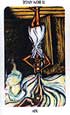
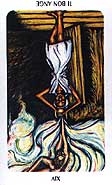 | The card at the bottom of the circle represents something you did to bring the situation about. Ti Bon Ange (Temperance), when reversed: Lack of restraint and self-control. Losing one's cool. Energies dispersed through conflicts in personal, business, and spiritual matters. |
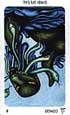
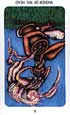
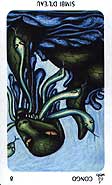 | The card at the bottom left of the circle represents your beliefs, impressions, or expectations. Simbi d'l'eau (Eight of Cups), when reversed: The realization that a matter thought to be important was actually of little consequence. Moving on from something in which you had invested great love and devotion. The start of an inner journey to find higher aspects of life. Reflection on what is truly fulfilling in life. |
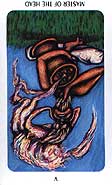 | The card at the bottom right of the circle represents the most likely outcome of the situation given present circumstances. Master of the Head (The Heirophant), when reversed: Authoritarianism. Inflexible and dogmatic thinking. A calcified old regime. Bad or incompetent advice. Inability to hear a higher or inner voice, or pretending to hear it for personal gain. |
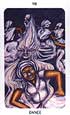
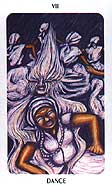 | The card at the upper left of the circle represents the spiritual history of the situation the things you've learned. Dance (The Chariot): Victory through might. Advancement through bold action. Change through force. Order established through vigilance. A trying situation mastered by balancing opposing forces against each other. Discipline, individual effort and endurance will turn the tide. |
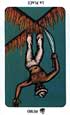
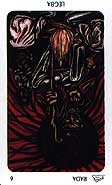 | The card at the top of the circle represents the spiritual tasks and challenges of the present situation. Legba (Six of Swords), when reversed: Conceit and intellectual pride. Being stuck in a problem which has no apparent solution. Frustration and anxiety that are left unsettled. Travel and exploration are delayed. |
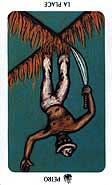 | The card at the upper right of the circle represents the metamorphosis of the spiritual situation, and how your knowledge will evolve. Petro La Place (Knight of Wands), when reversed: The dark essence of fire, such as a great conflagration: One filled with vitality and limitless appetite. A sexy and exciting person, obsessed with style and outward appearance, overconfident in their abilities, and foolhardy in their actions. A hot temper and domineering nature, coupled with a love of false drama and all things theatrical. Anxiety over remaining in one place or with one person for too long. The rapid approach, or more likely departure, of someone or something that ruptures your world. Often suggests travel as the result of discord, or cruel indifference. |
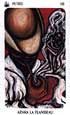
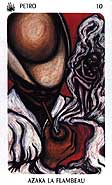 | The card at the left of the lower line represents the person or qualities that will sustain your spiritual journey. Azaka La Flambeau (Ten of Wands): Success and gain, leading you to take on a burden greater than you can carry. Noble leadership transformed, through lack of restraint, into tyranny. The crushing weight of ultimate responsibility. Having spent their fuel, the engines of creation grind to a halt. |
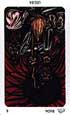
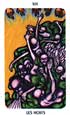
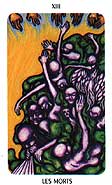 | The card in the middle of the lower line represents the qualities that you express in this circumstance. Les Morts (Death): A major change or transformation, possibly traumatic and unexpected. Freedom from the shackles of the past. A new beginning. Death coupled with rebirth, usually related to consciousness and lifestyle. |
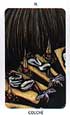
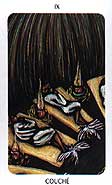 | The card at the right of the lower line represents the person or qualities that will reveal spiritual knowledge. Couche (The Hermit): Withdrawal from events and relationship to introspect and gather strength. Seeking the inner voice or calling upon vision from within. A need of understanding and advice, or a wise man who will offer knowing guidance. Personal experience and thoughtful temperance. |