| The Celtic Cross spread is one of the most popular Tarot spreads, providing varied insight into many aspects of a complex situation and your role in it. The Cat People Tarot paints a picture of faraway lands trod by mystical archetypes and their feline companions. This deck is a perfect tool for dreamers and idealists, and is a great choice for divining the nature of human imagination. If you would like your own copy of the Cat People Tarot, you can buy it now! |
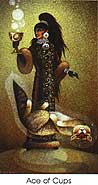 | The card not shown but at the center of the cross, represents the atmosphere surrounding the central issue. Ace of Cups: Great abundance. Fulfillment. Perfection. Joy. Fertility. Opulence. Fullness. Happiness. Productiveness. Beauty and pleasure. Goodness overflowing. Favorable outlook. |
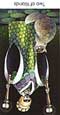
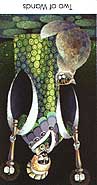 | The card visible at the center of the cross represents the obstacle that stands in your way - it may even be something that sounds good but is not actually to your benefit. Two of Wands (Dominion), when reversed: Sadness. Trouble. Restraint caused by others. Loss of faith. Unexpected surprise. |
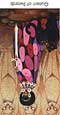
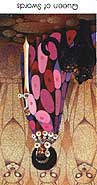 | The card at the top of the cross represents your goal, or the best you can achieve without a dramatic change of priorities. Queen of Swords, when reversed: Narrow-minded. Maliciousness. Bigotry. Deceitfulness. Vengefulness. Prudishness. A treacherous enemy. An ill-tempered person. |
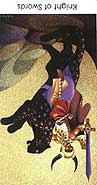 | The card at the bottom of the cross represents the foundation on which the situation is based. Knight of Swords, when reversed: Incapacity. Imprudence. Dispute or ruin due to a woman. Impulsive mistakes. Conceited fool. Disunion. |
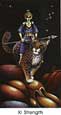
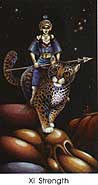 | The card at the left of the cross represents a passing influence or something to be released. Strength: Strength. Courage. Fortitude. Conviction. Energy. Determination. Defiance. Action. Awareness of temptations and the mental and physical abilities to overcome them. Confidence. Innate ability. Zeal. Physical strength. Attainment at considerable peril. Hidden forces at work are challenged. Heroism. Virility. Strength to endure in spite of obstacles. |
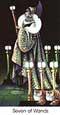
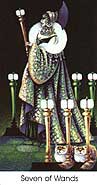 | The card at the right of the cross represents an approaching influence or something to be embraced. Seven of Wands (Valor): Success. Gain. Overcoming obstacles and challenges. Advantage. Victory. |
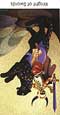
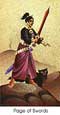
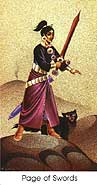 | The card at the base of the staff represents your role or attitude. Page of Swords: A person adept at perceiving and uncovering the unknown or that which is less than obvious. Insight. Vigilance. Agility. Spying. A discreet person. An active youth. A lithe figure alert to unknown dangers. |
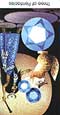
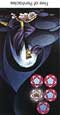
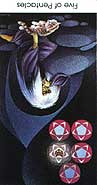 | The card second from the bottom of the staff represents your environment and the people you are interacting with. Five of Pentacles (Worry), when reversed: Reversal of bad trend. New interests, Overcoming disharmony in marriage or love. |
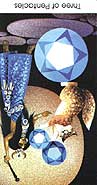 | The card second from the top of the staff represents your hopes, fears, or an unexpected element that will come into play. Three of Pentacles (Works), when reversed: Sloppiness. Mediocrity. Lower quality. Money problems. Commonplace ideas. Lack of skill. Preoccupation. |
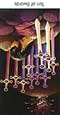
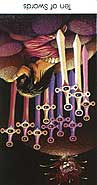 | The card at the top of the staff represents the ultimate outcome should you continue on this course. Ten of Swords (Ruin), when reversed: Benefit. Profit. Temporary gain. Improvement. Passing success. Momentary advantage. Temporary favor. |