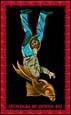
Today's Tarot for Oprah Winfrey
| The Cross and Triangle spread is a powerful means of understanding complex situations, developed by the Hermetic Order of the Golden Dawn. This spread is rich in occult and mystical symbolism, and one of our favorites here at Facade. The Curious Tarot is the rarest and most unusual of modern decks. The cards form a surreal collage of American consumer imagery, eerily capturing the archetypes of the atomic age. It is the deck of those who seek to harness the ancient tribal energy that courses through the modern urban world. There are only 100 Curious Tarot decks in existence - if you want one, buy it now!
|
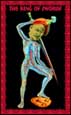
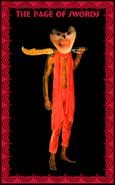 | The first card, the significator, is placed in the center of the cross. This card represents the prime energy manifest in your life. Page of Swords: The essence of air behaving as earth, such as a steady wind: The approach of an unexpected challenge, to be met with clear thought and just action. A person filled with an eager appetite for all matters of mind and logic. The gathering of information through unfaltering vigilance, careful examination, and subtle spycraft. The use of reason or eloquent speech to penetrate the veil of confusion and cut to the heart of the matter. |
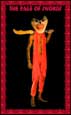
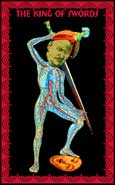 | The second card, placed above the significator, represents Air. It describes your spirit, process of thought, and the influence of reason. King of Swords: The essence of air, such as a clear blue sky: A mature leader of unwavering ethics and indisputable authority. An incorruptible judge, whose devotion to the law cannot be swayed by emotion or material concerns. Perfect clarity of thought, directness of action, and eloquence of speech. One who, like a great general, inspires not love or devotion, but absolute trust and loyalty. |
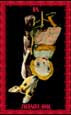
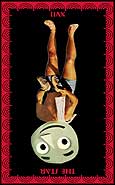 | The third card, placed to the right of the significator, represents Fire. It describes your motivations, creative energies, and the influence of passion. The Star, when reversed: Lost hopes, doubt and failure. Physical health and mental outlook lost in the outer darkness. Desperation leading to blind faith in false solutions. |
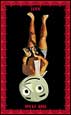
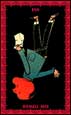
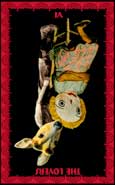 | The fourth card, placed below the significator, represents Water. It describes your emotions, meditations, and the influence of love. The Lovers, when reversed: Inner strife, frustration, suspicion, and disagreements in a relationship. Irresponsibility and indecision. Avoiding true intimacy in favor of lust. Unfaithfulness. |
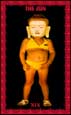
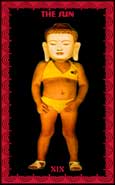 | The fifth card, placed to the left of the significator represents Earth. It describes your physical presence, position in life, and the influence of the material world. The Sun: A time of contentment and freedom from restraints. Creative inspiration. Achievement, success, and warmth. Light and love in personal or business matters. Happiness and faithfulness in a relationship. |
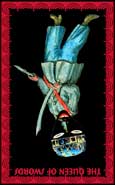 | At this point the cross is complete and the triangle is formed. The sixth card, placed on the bottom left of the triangle represents one of two opposing forces. Queen of Swords, when reversed: The dark essence of air behaving as water, such as a cold rain: A person gifted with both keen logic and natural intuition, giving them uncanny powers of perception and insight. One who easily sees the weakness in any argument, and savages friend and foe alike with biting sarcasm. Dry and vicious wit covering a hollow sense of isolation and dissatisfaction with life. |
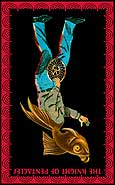 | The seventh card, placed on the bottom right of the triangle represents the force that opposes the bottom left card. These forces may be external, but they are frequently one's own inner archetypes in conflict. Knight of Pentacles, when reversed: The essence of earth behaving as fire, such as molten magma: One slow to action, even in the most urgent circumstances. A force of nature that cannot be diverted from the wrong path. The voice of duty and honor utterly divorced from reality. Lack of imagination and the complete unwillingness to try a different approach, even if the face of complete failure. Idleness and stagnation. |
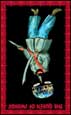
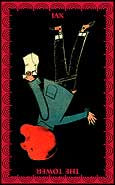 | The eighth card, the reconciler, is placed below the cross in the third vertex of the triangle. This is the force that will resolve the conflict between the bottom left and bottom right cards. By meditating on this force and bringing more of it into your life, you can bring the matter at hand to a swifter conclusion than would naturally occur. The Tower, when reversed: Unexpected upheaval leading to a positive change in life. Catastrophe survived or narrowly avoided. A new lifestyle and enlightenment. May indicate a broken relationship, divorce, or failure in business or career. |
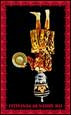
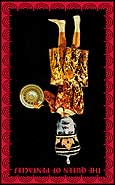 | The ninth and final card, placed in the center bottom of the triangle, represents the final outcome unless you change course. Queen of Pentacles, when reversed: The dark essence of earth behaving as water, such as ice: A cold but generous host, driven by an overwhelming need for to accumulate and maintain opulence. A person so preoccupied with wealth and security that they can never stop to enjoy either. One who reflects the weaknesses of others, breeding suspicion and mistrust. |
|
|