Today's Tarot for Ray Bradbury
| The Cross and Triangle spread is a powerful means of understanding complex situations, developed by the Hermetic Order of the Golden Dawn. This spread is rich in occult and mystical symbolism, and one of our favorites here at Facade. The Palladini Tarot was created to "bridge the ancient and the future", using elements of Medieval, Egyptian and modern art. It is one of the most popular decks among new students of Tarot. If you would like your own copy of the Palladini Tarot, you can buy it now! |
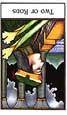
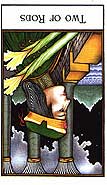 | The first card, the significator, is placed in the center of the cross. This card represents the prime energy manifest in your life. Two of Rods (Dominion), when reversed: The erosion of power and influence. Failing to articulate goals or establish a vision for the future. Being caught off guard, due to an inability to come to grips with the impact of past decisions. Obstinate and irresponsible leadership. Loss of interest, clarity, or faith in a venture. |
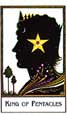
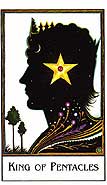 | The second card, placed above the significator, represents Air. It describes your spirit, process of thought, and the influence of reason. King of Pentacles: The essence of earth behaving as air, such as a diamond: A true businessman, with a gift for identifying opportunities and taking advantage of them. A person well informed about the world, skilled in all things physical, and eager to encourage others. A pillar of practicality and dependability, embracing tried and tested methods, and possessing an innate understanding of the material reality. A philanthropist and devotee of both luxury and hard work, whose word is as good as gold. |
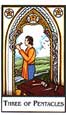
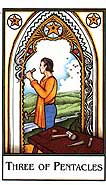 | The third card, placed to the right of the significator, represents Fire. It describes your motivations, creative energies, and the influence of passion. Three of Pentacles (Works): The commencement of business, commercial transactions, or employment. The constructive use of creative talents, and the expression of artistry in workmanship. Skill and labor turned to the crafting of things of value. Using the conventional as a medium for expressing the exceptional, in order to build something of great renown and glory. |
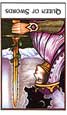
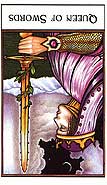 | The fourth card, placed below the significator, represents Water. It describes your emotions, meditations, and the influence of love. Queen of Swords, when reversed: The dark essence of air behaving as water, such as a cold rain: A person gifted with both keen logic and natural intuition, giving them uncanny powers of perception and insight. One who easily sees the weakness in any argument, and savages friend and foe alike with biting sarcasm. Dry and vicious wit covering a hollow sense of isolation and dissatisfaction with life. |
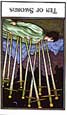
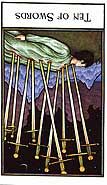 | The fifth card, placed to the left of the significator represents Earth. It describes your physical presence, position in life, and the influence of the material world. Ten of Swords (Ruin), when reversed: The darkness before the dawn. An end to suffering, leading to spiritual transformation. A crushing and seemingly total defeat that hides within it the seeds of final victory. Ultimate knowledge gained through ultimate sacrifice. |
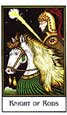
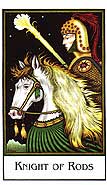 | At this point the cross is complete and the triangle is formed. The sixth card, placed on the bottom left of the triangle represents one of two opposing forces. Knight of Rods: The essence of fire, such a great conflagration. One filled with vitality and passion for life. A sexy and exciting person, daring in their actions, cocky in their attitude, and utterly without fear. Absolute sincerity, coupled with violent emotions that swing wildly from one extreme to another. Boundless creativity and lust for a change of both pace and place. The rapid approach, or more likely departure, of something that sets your world ablaze. Often suggests travel or escape. |
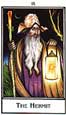
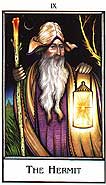 | The seventh card, placed on the bottom right of the triangle represents the force that opposes the bottom left card. These forces may be external, but they are frequently one's own inner archetypes in conflict. The Hermit: Withdrawal from events and relationship to introspect and gather strength. Seeking the inner voice or calling upon vision from within. A need of understanding and advice, or a wise man who will offer knowing guidance. Personal experience and thoughtful temperance. |
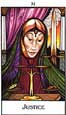
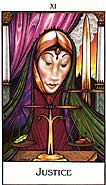 | The eighth card, the reconciler, is placed below the cross in the third vertex of the triangle. This is the force that will resolve the conflict between the bottom left and bottom right cards. By meditating on this force and bringing more of it into your life, you can bring the matter at hand to a swifter conclusion than would naturally occur. Justice: The achievement of balance and inner harmony after a great trial. Agreements, contracts, or treaties concluded justly. Things set to rights. Karma restored. A turn for the better in legal matters. |
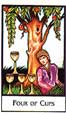
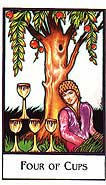 | The ninth and final card, placed in the center bottom of the triangle, represents the final outcome unless you change course. Four of Cups (Luxury): Being surrounded by love and devotion but taking it for granted. Ignoring the real and longing for the indefinable. Apathy and disengagement from the world. Dissatisfaction with the condition and direction of affairs, but the inability to accept new opportunities. |
|
|