Today's Tarot for Rene Magritte
| The Twisting Path spread provides insight into the path ahead of you and the choices you must make. This is the spread for situations where more than one pitfall may lie ahead. The Palladini Tarot was created to "bridge the ancient and the future", using elements of Medieval, Egyptian and modern art. It is one of the most popular decks among new students of Tarot. If you would like your own copy of the Palladini Tarot, you can buy it now! |
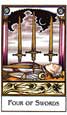
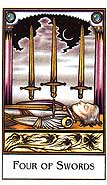 | The card at the lower left, represents the first decision along your path. Four of Swords (Truce): A time of tranquility and intellectual repose in the midst of a great struggle. A temporary retreat from stress to regather inner strength, reaffirm convictions, reorganize thoughts, and formulate a new plan. The need for vigilance in a moment of calm. May suggest a withdrawal from the material world to find spiritual guidance. |
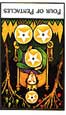
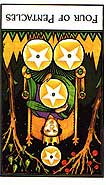 | The card to the far left represents the first false path that may lead you astray. Four of Pentacles (Power), when reversed: Using your power freely for your own enjoyment and the betterment of others. Coming to grips with progress and using your position to help it along. Finding security and identity someplace other than in the possession of material things. Letting go and encouraging others to find their own path. Being magnanimous and generous with your success. |
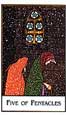
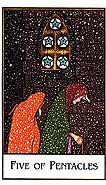 | The card in the middle represents the second decision along your path. Five of Pentacles (Worry): Hard times brought on by addiction, wasteful spending, ill health, or an outside event. Rejection, loneliness, and the need for comfort. May suggest unemployment, a catastrophe in personal finance, or a turn for the worse in business. |
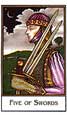
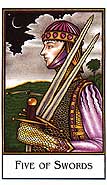 | The card at the lower right represents the second false path that may lead you astray. Five of Swords (Defeat): A success earned through personal degradation. Separation from friends brought about by an unfeeling and coldly calculated act. Temporary victory tainted by dishonor and providing fuel for eventual defeat. |
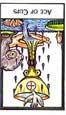
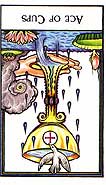 | The card at the top represents one possible mask of your true destination. Ace of Cups, when reversed: The seed of a destructive relationship or spiritual collapse. A missed opportunity for joy, contentment, fertility, or enlightenment. Failing to understand the emotional needs of those around you. May represent an unexpected message, a chance meeting, or the start of a friendship or romance. |
|
|