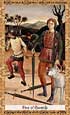
| The Celtic Cross spread is one of the most popular Tarot spreads, providing varied insight into many aspects of a complex situation and your role in it. The Golden Tarot is a modern celebration of late medieval artwork. This deck is the choice of scholars, for it evokes images of elegance amid barbarism, and the light of virtue in dark times. If you would like your own copy of the Golden Tarot, you can buy it now! |
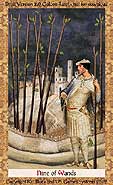 | The card not shown but at the center of the cross, represents the atmosphere surrounding the central issue. Nine of Wands (Strength): A pause in the current struggle to ready oneself. Preparation to meet the final conclusive onslaught. Forces assembled in anticipation of trials and tribulations. The steeling of the will to stand or fall. A line drawn in the sand. |
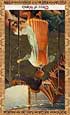
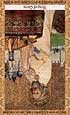
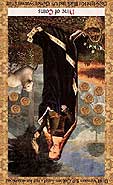 | The card visible at the center of the cross represents the obstacle that stands in your way - it may even be something that sounds good but is not actually to your benefit. Nine of Coins (Gain), when reversed: Bad luck attending material affairs. Elitism and snobbishness. Lack discipline resulting in the erosion of security and stability. Contempt for the exact labors that brought one to a position of refinement. Dishonesty in financial matters. |
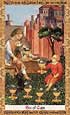
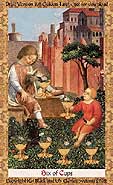 | The card at the top of the cross represents your goal, or the best you can achieve without a dramatic change of priorities. Six of Cups (Pleasure): Opening your heart to the simple pleasures of life. Fond memories fuel the playful embrace of love and life. Experiencing the joy of youth and sexual innocence. Engaging in acts of gentle kindness. Harmony of natural forces without effort or strain. Meeting an old friend. |
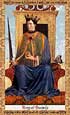
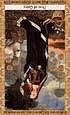
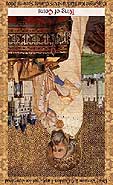 | The card at the bottom of the cross represents the foundation on which the situation is based. King of Coins, when reversed: The dark essence of earth behaving as air, such as a diamond: An unyielding businessman, with a gift for identifying weakness and exploiting it for personal gain. One well informed about material affairs, but ignorant of larger, more pressing issues. A blind devotee of business as usual, unconcerned with the unintended results, and contemptuous of new ideas. A person full of greed and avarice, easily corrupted by luxury or the temptations of the flesh. |
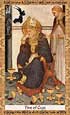
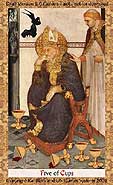 | The card at the left of the cross represents a passing influence or something to be released. Five of Cups (Disappointment): Suffering a loss and wishing for what might have been. Being crippled by sadness, grief, and vain regret. Indecision brought on by the feeling that you made the wrong choice. Ignoring what you still have. May suggest a broken relationship or tragedy. May also suggest a gift, inheritance, opportunity, partnership, or marriage, but one that falls below expectations. |
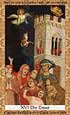
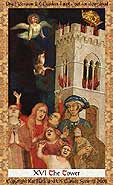 | The card at the right of the cross represents an approaching influence or something to be embraced. The Tower: Unforeseen catastrophe. An abrupt change, perhaps leading to a new lifestyle and enlightenment. May indicate a broken relationship, divorce, or failure in business or career. |
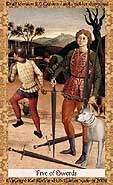 | The card at the base of the staff represents your role or attitude. Five of Swords (Defeat): A success earned through personal degradation. Separation from friends brought about by an unfeeling and coldly calculated act. Temporary victory tainted by dishonor and providing fuel for eventual defeat. |
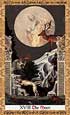
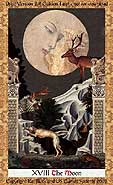 | The card second from the bottom of the staff represents your environment and the people you are interacting with. The Moon: Cyclic transformation covering the mysterious forces of the night. Feminine beauty and the intoxicating vitality of youth. The metamorphosis from beauty to beast and vice versa. Occult forces, sensitivities and intense dreams. Dangerous situations and perilous times. |
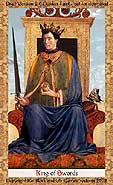 | The card second from the top of the staff represents your hopes, fears, or an unexpected element that will come into play. King of Swords: The essence of air, such as a clear blue sky: A mature leader of unwavering ethics and indisputable authority. An incorruptible judge, whose devotion to the law cannot be swayed by emotion or material concerns. Perfect clarity of thought, directness of action, and eloquence of speech. One who, like a great general, inspires not love or devotion, but absolute trust and loyalty. |
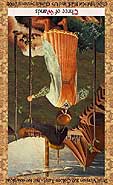 | The card at the top of the staff represents the ultimate outcome should you continue on this course. Three of Wands (Virtue), when reversed: Pride and arrogance. Convincing oneself that the ends justify the means. A great act of betrayal set in motion. Sinking to the level of an opponent. The vain quest for glory and a personal spotlight. Charity or friendship offered with intent of material gain. |