| The Cross and Triangle spread is a powerful means of understanding complex situations, developed by the Hermetic Order of the Golden Dawn. This spread is rich in occult and mystical symbolism, and one of our favorites here at Facade. The Cat People Tarot paints a picture of faraway lands trod by mystical archetypes and their feline companions. This deck is a perfect tool for dreamers and idealists, and is a great choice for divining the nature of human imagination. If you would like your own copy of the Cat People Tarot, you can buy it now! |
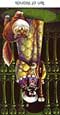
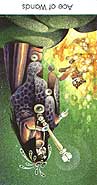 | The first card, the significator, is placed in the center of the cross. This card represents the prime energy manifest in your life. Ace of Wands, when reversed: False start. Cloudy outlook. Unrealized goal. Decadence. Empty existence. Vexation. Cancellation of plans. |
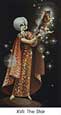
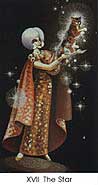 | The second card, placed above the significator, represents Air. It describes your spirit, process of thought, and the influence of reason. The Star: Hope. Faith. Inspiration. Bright prospects. Mixing of the past and present. Optimism. Insight. Good omen. Spiritual love. Ascending star. Astrological influence. Satisfaction. Pleasure. The proper balance of desire and work, hope and effort, love and expression. |
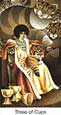
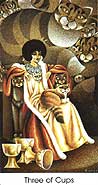 | The third card, placed to the right of the significator, represents Fire. It describes your motivations, creative energies, and the influence of passion. Three of Cups (Abundance): Resolution of a problem. Conclusion. Solace. Healing. Satisfactory result. Partial fulfillment. Compromise. |
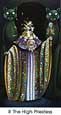
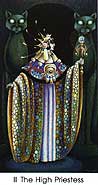 | The fourth card, placed below the significator, represents Water. It describes your emotions, meditations, and the influence of love. The High Priestess: Wisdom. Sound judgment. Knowledge. Learning. Serenity. Objectivity. Penetration. Education. Foresight. Intuition. Perception. Hidden emotion. Purity. Virtue. Apparent emotionlessness. Lack of patience. Platonic relationships. Teacher. |
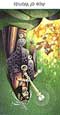
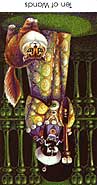 | The fifth card, placed to the left of the significator represents Earth. It describes your physical presence, position in life, and the influence of the material world. Ten of Wands (Oppression), when reversed: Difficulties. Intrigues. Duplicity. Treachery. A traitor. Deceiver. Subterfuge. Some losses will occur. |
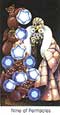
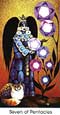
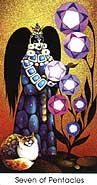 | At this point the cross is complete and the triangle is formed. The sixth card, placed on the bottom left of the triangle represents one of two opposing forces. Seven of Pentacles (Assessment): Ingenuity. Growth. hard work. Progress. Successful dealings. Money. Wealth. Treasure. Gain. |
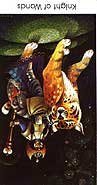 | The seventh card, placed on the bottom right of the triangle represents the force that opposes the bottom left card. These forces may be external, but they are frequently one's own inner archetypes in conflict. Knight of Wands, when reversed: Discord. Interruption. Unexpected change. Quarreling. Breakup of personal relationships. Rupture. Discontinuance. |
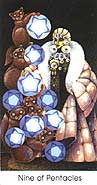 | The eighth card, the reconciler, is placed below the cross in the third vertex of the triangle. This is the force that will resolve the conflict between the bottom left and bottom right cards. By meditating on this force and bringing more of it into your life, you can bring the matter at hand to a swifter conclusion than would naturally occur. Nine of Pentacles (Gain): Accomplishment. Discernment. Discretion. Foresight. Safety. Prudence. Material well-being. Love of nature. |
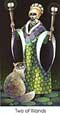
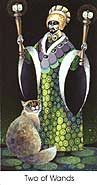 | The ninth and final card, placed in the center bottom of the triangle, represents the final outcome unless you change course. Two of Wands (Dominion): Mature individual. Ruler. Attainment of goals and needs. Boldness. Courage in undertakings. A dominant personality. |