| The Hagall spread is a tool for revealing the path of spiritual growth in difficult situations. It is a favorite of mystics and those confronting a major life challenge. The Renaissance Tarot is a modern deck, with symbolism drawn from the heroic age and rendered in renaissance style. This deck is an excellent choice for exploring questions of passion, mastery, and the inner workings of human reason. If you would like your own copy of the Renaissance Tarot, you can buy it now! |
 | The card in the middle of the circle represents the core or central issue of the situation. Death: Death. Loss. Death and rebirth. End of an old situation and the beginning of a new one. |
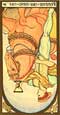
 | The card at the bottom of the circle represents something you did to bring the situation about. Two of Staves (Dominion), when reversed: Wavering in the charge ahead. Victories delayed. Stalemate. |
 | The card at the bottom left of the circle represents your beliefs, impressions, or expectations. Ten of Cups (Satiety): The union of love and the soul. Happiness in love. Balance in friendship. Joyful equanimity in oneself. |
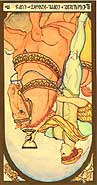 | The card at the bottom right of the circle represents the most likely outcome of the situation given present circumstances. Knight of Cups, when reversed: Fraudulent emotion. A charming, but irresponsible person. |
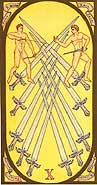 | The card at the upper left of the circle represents the spiritual history of the situation the things you've learned. Ten of Swords (Ruin): Calamity. The failure of a hero, foretold in prophesy, but brought about by the hero's own choices. |
 | The card at the top of the circle represents the spiritual tasks and challenges of the present situation. Nine of Swords (Cruelty): Revenge. Excessive or violent response to a problem. Jealousy. |
 | The card at the upper right of the circle represents the metamorphosis of the spiritual situation, and how your knowledge will evolve. Queen of Staves: A person of sunny disposition, accomplished, graceful and gracious. A patroness or adept of the fine arts and sciences. A wedding of intelligence and creativity, giving flower in fruitfulness. |
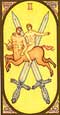
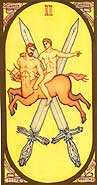 | The card at the left of the lower line represents the person or qualities that will sustain your spiritual journey. Two of Swords (Peace): Friendship, especially between student and teacher or younger and older. The adventure and excitement of childhood and adolescence. |
 | The card in the middle of the lower line represents the qualities that you express in this circumstance. The Hanged Man, when reversed: Masochism. Self-imposed confinement. Potential release from bondage. |
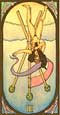
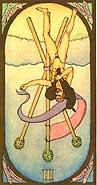 | The card at the right of the lower line represents the person or qualities that will reveal spiritual knowledge. Three of Staves (Virtue), when reversed: Dishonesty and conflict in affairs. |