Today's Runes for Bob Fosse
| The Cross spread is used to plot the arc of your life and the forces acting on it. It is the most popular spread, giving a very complete view of the situation. Spirit Runes are most commonly used for questions about mysticism, spirituality, and religion. |
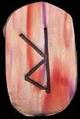
| The left rune represents an important element of the past. Raido is the rune of riding, as in a cart or as cargo. It is seen here reversed, suggesting a disruption of travel or communication. Etiological analysis of this rune has also given it interpretations of advice or justice, and of being in a position of moral correctness. Reversed, there is an indication of the lack of solid council, or the holding of a position that is not morally sound. |
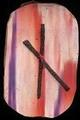
| The middle rune represents a deciding element of the present. Nyd represents many things, most of them unpleasant - heed it well. Constraint, delay, loss, need, and sorrow are all frequently seen in this rune. Nyd speaks most strongly of pause, the hallmark of the both the timid and the patient, and is often interpreted as foretelling a delay in the effect of other runes that it accompanies. Fortunately, even where there is misery and danger there are valuable lessons to be learned - the trick is to learn them before you are overtaken by despair. |
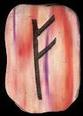
| The top rune represents a force that works for you. Fehu represents cattle the Norse symbol of wealth. This rune has some interesting implications based on the fact that cattle, unlike land, move about of their own accord. Cattle also reproduce, so this rune often speaks of wealth that renews or perpetuates itself. Wealth takes many forms, but this rune generally represents the value that is purely material or monetary in nature. Alternatively, this rune is deeply associated with Frey, and hence can be the harbinger of fertility and children. |
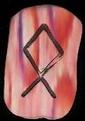
| The bottom Rune represents a force that works against you. Othila is the homeland. Land was the purest form of immovable wealth in Norse civilization, distinct from the movable wealth represented by Fehu. This rune speaks of stability and safety stemming from inheritance, both material and genetic. With respect to the question asked, consider the background of the people and families involved... |
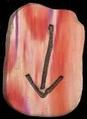
| The right rune represents the critical element of the future, at the core of the final outcome. Tyr was the Norse god of war. It was through his sacrifice that the great force of chaos, the wolf Fenrir was bound. Here however, you have drawn the rune reversed. This could mean that a sacrifice made will not lead to the desired result. It could also mean a loss, or a victory overturned. This rune warns against entering into conflicts or negotiations, especially ones requiring that an offering or concession be made - the wolf might take your hand and yet remain unbound. Note also that Tyr was the god of law, so there is a suggestion of a wrongdoer who will avoid justice. |
|
|