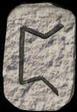
Today's Runes for Michael Moore
| The Norn spread is used to plot the crucial elements of past, present, and future, and to reveal the evolution of the situation through the arc of time. Stone Runes are most commonly used for questions about the natural world and things beyond human control. |
| The left rune represents an important element of the past. Wunjo is the rune of joy. The reversal of this rune suggests that joy is withheld. Since joy is frequently communal, this rune often suggests loneliness. Alternatively, some have seen Wunjo as the rune of perfection and the rune of the gods. Therefore this rune reversed could signal a feeling of separation from one's deity, or as imperfection in an important work. |
| The middle rune represents a deciding element of the present. Gebo means gift, and like many gifts, the rune may be understood on many levels. Gifts are generally positive things, for both the giver and the recipient. In many cultures however, gifts and favors carry with them an obligation to respond in kind. It is for this reason that gifts, and hence the rune Gebo, are frequently symbolic of friendships, marriages, alliances, mergers, and other bonds between people or organizations. Gebo is a strong rune and the unions represented are strong as well. Moreover, Gebo is not reversible, as true friendships are not easily undone. |
| The right rune represents the critical element of the future. Fehu is the rune of cattle, the symbol of wealth in the old Norse civilization. Since Fehu is the first rune in Frey's aett, it is a rune of fertility as well. As seen here reversed, it can represent barrenness or the loss of wealth. Some interpret Fehu as representing children, in which case the reversal may portend the distancing of a child from her or his parents. |
|
|