Today's Tarot for Arnold Schwarzenegger
| The Creative Process spread is designed specifically to peer into the nature of a project or creative undertaking, and shine a spotlight on the evolution of its parts. The Colman Smith Tarot is a modern reinvention of the classic Rider Waite deck, infusing the original line drawings by Pamela Colman Smith with colors drawn from the psychedelic digital age. |
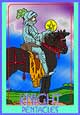
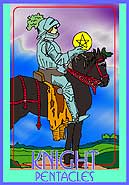 | The card in the middle represents the creative force behind the project, be it a person, organization, or other entity. Knight of Pentacles: The essence of earth behaving as fire, such as molten magma: One slow to action, but decisive and unrelenting once set in motion. A force of nature whose methods are as predictable and dependable as they are unstoppable. The voice of duty, honor, and responsibility. The will to the change the world, not through bold action, but through the thorough and unwavering application of proven means. |
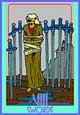
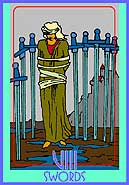 | The card on the top represents imagination - the prophetic image that stems from the creative force of the previous card to initiate the project. This is the poetry or voice of the undertaking. Eight of Swords (Interference): Chagrin at the unforeseen consequences of prior decisions. Criticism, censure, and the imposition of external restrictions. Confusion leading to powerlessness. Inability to focus on the crux of a problem and free oneself from a difficult situation. Being hamstrung by a past failure or humiliation. |
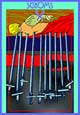
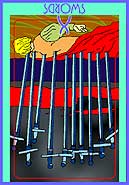 | The card on the left represents emotion - the feelings aroused by or surrounding the ideation of the project that takes place in the previous card. This is the music or scent of the undertaking. Ten of Swords (Ruin), when reversed: The darkness before the dawn. An end to suffering, leading to spiritual transformation. A crushing and seemingly total defeat that hides within it the seeds of final victory. Ultimate knowledge gained through ultimate sacrifice. |
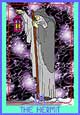
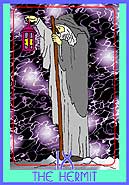 | The card on the bottom represents thought - the analytical process of organizing the project and capturing the emotional content of the previous card. This is the science or vision of the undertaking. The Hermit: Withdrawal from events and relationship to introspect and gather strength. Seeking the inner voice or calling upon vision from within. A need of understanding and advice, or a wise man who will offer knowing guidance. Personal experience and thoughtful temperance. |
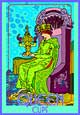
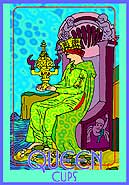 | The card on the right represents manifestation - the real work involved in completing the project, and the form it will take upon culmination. This is the painting or touch of the undertaking. Queen of Cups: The essence of water, such as a deep and placid lake: Spirituality, maturity, and grace. A natural counselor and healer, One whose relaxed presence seems to embody deep love and spirituality. A tranquil poet who reflects the nature of the observer. The embrace of all things dreamlike and receptive, such as perfect and unconditional love. |
|
|