| The Celtic Cross spread is one of the most popular Tarot spreads, providing varied insight into many aspects of a complex situation and your role in it. The Voodoo Tarot of New Orleans is a deck rich in primal spirituality. It draws on images from the religion Santeria, which weaves Catholic and African beliefs into a vibrant tapestry. This exceptional deck is most often used to ask questions regarding the joy, fury, and spirituality in everyday life. If you would like your own copy of the Voodoo Tarot of New Orleans, you can buy it now! |
 | The card not shown but at the center of the cross, represents the atmosphere surrounding the central issue. Nan Nan Bouclou (Two of Swords): Contradictory characteristics brought together as a means of resolving a conflict. Refusing to be ruled by negative emotions. Strife brought to a close through clarity of mind and restraint of force. Turning a blind eye to the minor infractions of others. |
 | The card visible at the center of the cross represents the obstacle that stands in your way - it may even be something that sounds good but is not actually to your benefit. Nan Nan Bouclou La Flambeau (Two of Wands): Established power and influence over others. Setting goals and a vision for the future. Coming to grips with the impact of past decisions, considering the current state of affairs, and developing a plan of action. Responsible leadership. |
 | The card at the top of the cross represents your goal, or the best you can achieve without a dramatic change of priorities. Marassa (The Lovers): A caring and trusting relationship. Beauty and inner harmony. A decision calling for emotional control and faithfulness to spiritual values. |
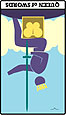
 | The card at the bottom of the cross represents the foundation on which the situation is based. La Sirene (Seven of Cups), when reversed: Daydreams and fantasies brought into realistic focus. The contemplation of many options leading to a conclusive choice. Inner clarity that dissipates illusions and false choices. Remaining connected to reality in the face of intoxication, delirium, or hallucination. Under rare and extreme circumstances, may indicate the failure to recognize a transcendental spiritual truth. |
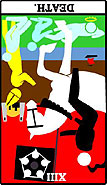
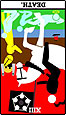
 | The card at the left of the cross represents a passing influence or something to be released. Les Morts (Death): A major change or transformation, possibly traumatic and unexpected. Freedom from the shackles of the past. A new beginning. Death coupled with rebirth, usually related to consciousness and lifestyle. |
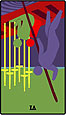
 | The card at the right of the cross represents an approaching influence or something to be embraced. Agwe La Flambeau (Four of Wands): A chance to rest and rejoice, having successfully resolved a matter of great import. The initial success of a business venture or creative project. The blossoming of a friendship or romantic relationship. Conclusions drawn based on hard won experience. Spiritual, material, or emotional rewards for diligent effort. May suggest marriage, childbirth, or a victory celebration. |
 | The card at the base of the staff represents your role or attitude. Azaka (Ten of Swords): Crushing defeat brought about by idle intellectualism divorced from reality. Sadness and desolation in the aftermath of a catastrophic and total collapse. A decisive conclusion brought about through the swift and merciless application of overwhelming force. |
 | The card second from the bottom of the staff represents your environment and the people you are interacting with. Deluge (The Tower): Unforeseen catastrophe. An abrupt change, perhaps leading to a new lifestyle and enlightenment. May indicate a broken relationship, divorce, or failure in business or career. |
 | The card second from the top of the staff represents your hopes, fears, or an unexpected element that will come into play. Ti Bon Ange (Temperance): Calm and restraint. Self-control, patience and tact in handling situations. The act of applying balanced spiritual and psychic forces to physical life. |
 | The card at the top of the staff represents the ultimate outcome should you continue on this course. Loco (The Emperor): Worldly authority and power. Social mastery and oratory. One who is intelligent, experienced, confident and reasonable. A patriarch or primary male influence. The motive force of politics and society. The ability to fulfill plans and use mental control over the emotions. |