| The Two Paths spread provides insight into an important decision ahead of you, the possible outcomes, and the forces that draw you towards each of these outcomes. The William Blake Tarot explores the mystical vision and artistry of the renowned English painter and poet. Through rich interpretations focused on creative undertakings, it has long been the deck of choice for artists, writers, musicians, and thinkers. For more information about this deck, or to buy your own personal copy, go to www.blaketarot.com.
|
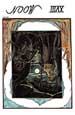
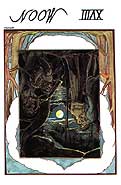 | The top left card represents the first possible outcome. Moon, when reversed: Encountering unconscious fears. Possible self-deceptions and distortions of reality. Lunatic urges, including sexual license. Keeping secrets. Hidden conditions and unknown circumstances. Cyclic patterns and influences. |
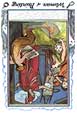
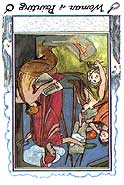 | The top right card represents the second possible outcome. Woman of Painting, when reversed: Bureaucracy and administration to the exclusion of the creative. The pursuit of tangible rewards at all costs. Team building and cooperative efforts where a single vision is required. Supporting and acknowledging others for political gain. Infatuation with the shallow. In the creative process: Your creative ideas are now taking tangible form, assisted by good use of your available resources and personnel. |
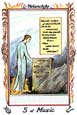
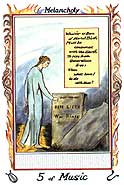 | The middle left card represents the force drawing you towards the first possible outcome. Five of Music (Melancholy): "Whatever is Born of Mortal Birth / Must be consumed with the Earth / To rise from Generation free: / Then what have I to do with thee?". Emotional disappointment. Existential angst. Spiritual insights following a sad event. Separating and moving on. Sadness, loss, grieving. Acknowledging your mistakes. Releasing ties and attachments from the past. In the creative process: Convert the pain of disappointment or loss into artistic expression. Let go of something old or dead and move on to something new and alive. |
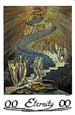
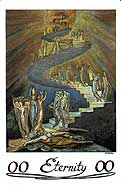 | The middle right card represents the force drawing you towards the second possible outcome. Eternity: The intervention of transcendent forces in the everyday world. The mighty are brought low and the meek are elevated. The transience of lesser concerns brings about the healing of old wounds and the achievement of great wisdom. A timeless perspective and the revelation of profound and immutable truth. Divine inspiration. |
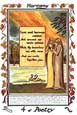
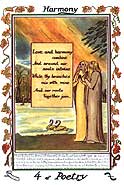 | The bottom card represents the critical factor that decides what will come to pass. Four of Poetry (Harmony): "Love and harmony combine / And around our souls entwine / While thy branches mix with mine / And our roots together join". Things are coming together beautifully. Giving thanks for an achievement or personal success. Celebrating a harvest, homecoming, or a job well done. Harmonious relationships with friends and family. Working together with a partner or sharing a special experience. In the creative process: The various elements and personalities involved in your project are interacting harmoniously, generating an appropriate sense of gratitude for what has been accomplished so far. |