Today's Tarot for Coco Chanel
| The Shadow Truth spread provides insight into your attitudes and hidden feelings. This spread is used when you are having trouble confronting something, or fear that you are concealing something from yourself. The Palladini Tarot was created to "bridge the ancient and the future", using elements of Medieval, Egyptian and modern art. It is one of the most popular decks among new students of Tarot. If you would like your own copy of the Palladini Tarot, you can buy it now! |
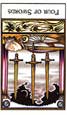
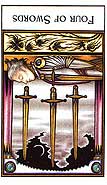 | The card in the center represents the attitude you assume. Four of Swords (Truce), when reversed: Restlessness and mental disharmony. Deserting a struggle in progress. A temporary retreat from stress that turns into a permanent rout. A lack of vigilance that could lead to disaster. |
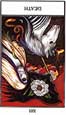
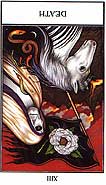 | The card to the right represents the thoughts and feelings that underly your attitudes. Death, when reversed: Stagnation or petrifaction. The refusal to let go of the past. Resistance to change because of fear. |
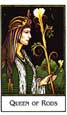
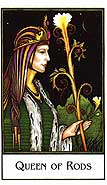 | The card at the top represents how your attitude is evolving and will evolve in the future. Queen of Rods: The essence of fire behaving as water, such as a rainbow: The natural embodiment of passion and sensuality, who is always the center of attention. One who reflects the desires and ambitions of others, and ignites them. A radiantly vital person, cocky and charismatic, who sees what she wants and goes after it. |
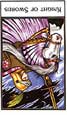
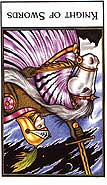 | The card to the left represents how others perceive your attitude. Knight of Swords, when reversed: The dark essence of air behaving as fire, such as a tornado: A merciless and skillful warrior, unfettered by emotion or conscience. A nihilist who can refuse not even the most insurmountable of challenges. A person who inspires fear and hate through their domineering nature and the power of their presence. Speaking without tact or tolerance, in a sarcastic manner. May portend the swift initiation or conclusion of conflict, through the calamitous invocation of force. |
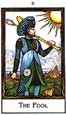
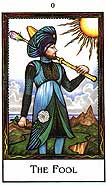 | The card at the bottom represents what you cannot confront or are hiding from yourself. The Fool: Fearlessness, imagination, open-mindedness, and an adventurous spirit. Freedom from cares and worries. Ideas, thoughts, and impulses coming from a completely unexpected place. Nonchalance at the threshold of gaining all or losing all. Extravagance and intoxication with life. The pure and undifferentiated power of creation itself, where ultimate knowledge and oblivion are unified. |
|
|