Today's Tarot for Douglas Adams
| The Shadow Truth spread provides insight into your attitudes and hidden feelings. This spread is used when you are having trouble confronting something, or fear that you are concealing something from yourself. The International Icon Tarot renders traditional occult symbolism in Swiss iconography. It is a humorous and direct approach to divination, and one of our favorite new decks. If you would like your own copy of the International Icon Tarot, you can buy it now!
|
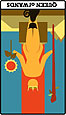
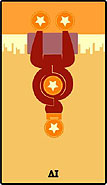 | The card in the center represents the attitude you assume. Four of Pentacles (Power), when reversed: Using your power freely for your own enjoyment and the betterment of others. Coming to grips with progress and using your position to help it along. Finding security and identity someplace other than in the possession of material things. Letting go and encouraging others to find their own path. Being magnanimous and generous with your success. |
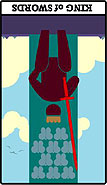 | The card to the right represents the thoughts and feelings that underly your attitudes. King of Swords, when reversed: The dark essence of air, such as a gray sky: A mature leader of unyielding ethics and absolute authority. An incorruptible judge, whose devotion to the letter of the law cannot be swayed by emotion, mercy, or exigent circumstances. Perfect clarity of thought, excessive use of force, and mastery of language as a tool for deception. One who, like a great tyrant, inspires not love or devotion, but fear, respect, and obedience. |
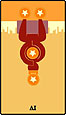
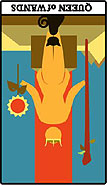 | The card at the top represents how your attitude is evolving and will evolve in the future. Queen of Wands, when reversed: The dark essence of fire behaving as water, such as steam: The natural embodiment of passion and sensuality, who will do anything to the be the center of attention. A seducer who calculatingly dons the guise of what others desire. A cocky and domineering person, who pushes anyone or anything aside to get what she wants. One who is vengeful and quick to take offense without good cause. May indicate infidelity and contempt for a relationship. |
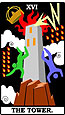
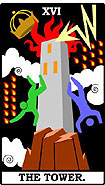 | The card to the left represents how others perceive your attitude. The Tower: Unforeseen catastrophe. An abrupt change, perhaps leading to a new lifestyle and enlightenment. May indicate a broken relationship, divorce, or failure in business or career. |
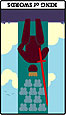
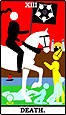
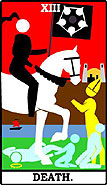 | The card at the bottom represents what you cannot confront or are hiding from yourself. Death: A major change or transformation, possibly traumatic and unexpected. Freedom from the shackles of the past. A new beginning. Death coupled with rebirth, usually related to consciousness and lifestyle. |
|
|