| The Celtic Cross spread is one of the most popular Tarot spreads, providing varied insight into many aspects of a complex situation and your role in it. The Colman Smith Tarot is a modern reinvention of the classic Rider Waite deck, infusing the original line drawings by Pamela Colman Smith with colors drawn from the psychedelic digital age. |
 | The card not shown but at the center of the cross, represents the atmosphere surrounding the central issue. The Tower, when reversed: Unexpected upheaval leading to a positive change in life. Catastrophe survived or narrowly avoided. A new lifestyle and enlightenment. May indicate a broken relationship, divorce, or failure in business or career. |
 | The card visible at the center of the cross represents the obstacle that stands in your way - it may even be something that sounds good but is not actually to your benefit. Ten of Cups (Satiety): Fulfillment and joy in life and love. Feeling peace, tranquility, and contentment in friends and family. Taking delight in one's good fortune. |
 | The card at the top of the cross represents your goal, or the best you can achieve without a dramatic change of priorities. Four of Swords (Truce), when reversed: Restlessness and mental disharmony. Deserting a struggle in progress. A temporary retreat from stress that turns into a permanent rout. A lack of vigilance that could lead to disaster. |
 | The card at the bottom of the cross represents the foundation on which the situation is based. The Hierophant: Faith in tradition and the old school. A justified and ancient source of power. Being supportive, sympathetic and loyal. Receiving instructions, learning, guidance or inspiration. The ability to hear a higher or inner voice. May also indicate a religious ritual, such as a marriage or an initiation. |
 | The card at the left of the cross represents a passing influence or something to be released. The Magician, when reversed: Trickery, demagoguery, and artful deceptions. The use of knowledge and skill for selfish gain or destructive purposes. The abuse of technology. Incompetence and uncertainty. A lack of will power. A fatal flaw in a great work. |
 | The card at the right of the cross represents an approaching influence or something to be embraced. The Emperor, when reversed: Weakness in character leading to tyranny and abuse of worldly power. Loss of confidence and ambition, coupled with the cold execution of the unthinkable. The inability to carry out plans or command respect. Being unreasonable and prone to fits of rage. A deceiver or demagogue. |
 | The card at the base of the staff represents your role or attitude. Two of Swords (Peace), when reversed: Indecision due to contradictory characteristics brought together. Tension in the aftermath of a quarrel that has been resolved. Scheming, abuse of trust, and agreements made in bad faith. Allowing the mind to block off the emotions. Self deception as a means of justifying cruel acts. |
 | The card second from the bottom of the staff represents your environment and the people you are interacting with. The Star, when reversed: Lost hopes, doubt and failure. Physical health and mental outlook lost in the outer darkness. Desperation leading to blind faith in false solutions. |
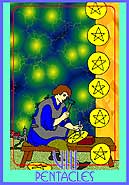 | The card second from the top of the staff represents your hopes, fears, or an unexpected element that will come into play. Eight of Pentacles (Prudence): Dedicating yourself fully to a task. Learning a new craft or skill. Applying painstaking attention to detail. Industriousness and the efficient completion of tasks. Sticking with a project long enough to see it through. |
 | The card at the top of the staff represents the ultimate outcome should you continue on this course. Page of Cups, when reversed: The dark essence of water behaving as earth, such as a wellspring: An unexpected new relationship that is childish and foolish. An idle dreamer oblivious to the realities of the world. Moodiness, sad reflection, and retreat from society. Seduction and deception in personal and business relationships. |