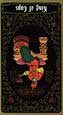
| The Celtic Cross spread is one of the most popular Tarot spreads, providing varied insight into many aspects of a complex situation and your role in it. The Russian Tarot of Saint Petersburg is the final commissioned work of Yuri Shakov, a master in the lost art of Russian miniature painting. The rich, dark images lend themselves to questions regarding the struggle of the human spirit in trying times. If you would like your own copy of the Russian Tarot of Saint Petersburg, you can buy it now! |
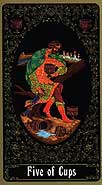 | The card not shown but at the center of the cross, represents the atmosphere surrounding the central issue. Five of Cups (Disappointment): Partial loss. Regret. Friendship without real meaning. Marriage without real love. Inheritance. Incomplete union or partnership. |
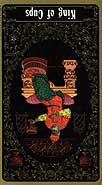 | The card visible at the center of the cross represents the obstacle that stands in your way - it may even be something that sounds good but is not actually to your benefit. King of Cups, when reversed: Artistic temperament. Double dealing. Scandal. Loss. Ruin. Injustice. A crafty person without virtue. |
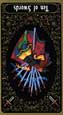
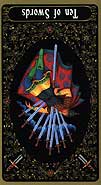 | The card at the top of the cross represents your goal, or the best you can achieve without a dramatic change of priorities. Ten of Swords (Ruin), when reversed: Benefit. Profit. Temporary gain. Improvement. Passing success. Momentary advantage. |
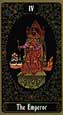
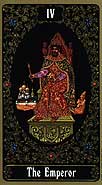 | The card at the bottom of the cross represents the foundation on which the situation is based. The Emperor: Worldly power. Confidence. Wealth. Stability. Authority. Indomitable spirit. War-making tendencies. Father. Brother. Husband. Male influence. Domination of intelligence and reason over emotion and passion. Patriarchal figure. |
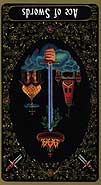 | The card at the left of the cross represents a passing influence or something to be released. Ace of Swords, when reversed: Debacle. Tyranny. Disaster. Self-destruction. Violent temper. Embarrassment. Obstacle. Infertility. |
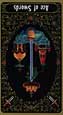
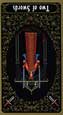
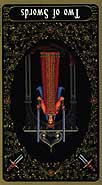 | The card at the right of the cross represents an approaching influence or something to be embraced. Two of Swords (Peace), when reversed: Duplicity. Misrepresentation. Dishonor. Treachery. False friends. Lies. |
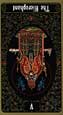
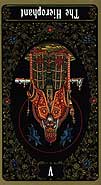 | The card at the base of the staff represents your role or attitude. The Hierophant, when reversed: Foolish generosity. Susceptibility. Impotence. Vulnerability. Frailty. Unorthodoxy. Renunciation. |
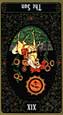
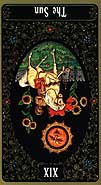 | The card second from the bottom of the staff represents your environment and the people you are interacting with. The Sun, when reversed: Unhappiness. Loneliness. Possibly a broken engagement or marriage. Canceled plans. Triumph delayed although not necessarily completely lost. Clouded future. |
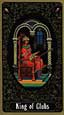
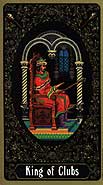 | The card second from the top of the staff represents your hopes, fears, or an unexpected element that will come into play. King of Clubs: An honest and conscientious person. Mature. Wise. Devoted. Friendly. Sympathetic. Educated. A gentleman. Generally married. Fatherly. |
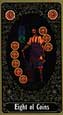
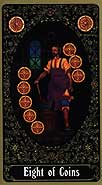 | The card at the top of the staff represents the ultimate outcome should you continue on this course. Eight of Coins (Prudence): Apprenticeship. Craftsmanship. Quickness to learn. Candor. Modesty. Handiwork. Personal effort. |