Today's Tarot for Elvis Presley
| The Twisting Path spread provides insight into the path ahead of you and the choices you must make. This is the spread for situations where more than one pitfall may lie ahead. The Marseilles Tarot is an 18th century creation of obscure origins. It predates the occult symbolism of the Rider Waite deck by roughly 200 years, giving the readings a unique and rustic flavor. Many swear by this deck as the true oracle of the common man. If you would like your own copy of the Marseilles Tarot, you can buy it now! |
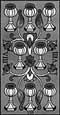
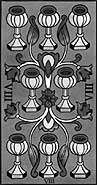 | The card at the lower left, represents the first decision along your path. Eight of Cups (Indolence): Losing interest in a matter deeply important to you. Being forced to abandon something in which you had invested great love and devotion. Seeking earthly, physical pleasures, to the exclusion of spiritual growth and emotional fulfillment. Emotional withdrawal and lethargy. |
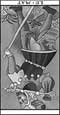
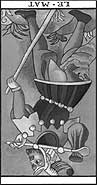 | The card to the far left represents the first false path that may lead you astray. Le Mat (The Fool), when reversed: Apathy, negligence, and dangerous carelessness. Unquenchable wanderlust. Obsession with someone or something. Losing all sense of proportion. Foolhardy adventuring and lack of interest in critical matters. Immature or unrealistic ideals. Strange impulses and desires coming from unexpected sources. Vanity, delirium, folly, and oblivion. |
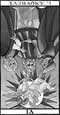
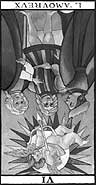 | The card in the middle represents the second decision along your path. L'Amoureux (The Lovers), when reversed: Inner strife, frustration, suspicion, and disagreements in a relationship. Irresponsibility and indecision. Avoiding true intimacy in favor of lust. Unfaithfulness. |
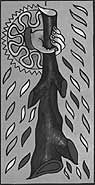 | The card at the lower right represents the second false path that may lead you astray. Ace of Batons, when reversed: The seed of a new crisis - perhaps as yet unseen. The start of an explosive situation threatening to consume all who get too close. The herald of birth, invention, or upheaval. An innate and primal force unleashed. May suggest a surge of vitality, creativity, or fertility that can set dangerous events in motion. |
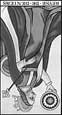
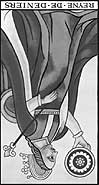 | The card at the top represents one possible mask of your true destination. Reyne de Deniers (Queen of Coins), when reversed: The dark essence of earth behaving as water, such as ice: A cold but generous host, driven by an overwhelming need for to accumulate and maintain opulence. A person so preoccupied with wealth and security that they can never stop to enjoy either. One who reflects the weaknesses of others, breeding suspicion and mistrust. |
|
|