Today's Tarot for George Harrison
| The Celtic Cross spread is one of the most popular Tarot spreads, providing varied insight into many aspects of a complex situation and your role in it. The Curious Tarot is the rarest and most unusual of modern decks. The cards form a surreal collage of American consumer imagery, eerily capturing the archetypes of the atomic age. It is the deck of those who seek to harness the ancient tribal energy that courses through the modern urban world. There are only 100 Curious Tarot decks in existence - if you want one, buy it now!
|
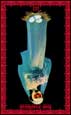
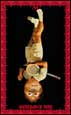
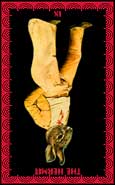 | The card not shown but at the center of the cross, represents the atmosphere surrounding the central issue. The Hermit, when reversed: Detachment based on fear, irresponsibility or naivet�. Self-imposed isolation from friends and loved ones. Listening to the wrong advice or ignoring good counsel. Concealment, disguise, and unreasoned caution. |
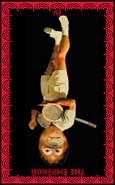 | The card visible at the center of the cross represents the obstacle that stands in your way - it may even be something that sounds good but is not actually to your benefit. The Emperor, when reversed: Weakness in character leading to tyranny and abuse of worldly power. Loss of confidence and ambition, coupled with the cold execution of the unthinkable. The inability to carry out plans or command respect. Being unreasonable and prone to fits of rage. A deceiver or demagogue. |
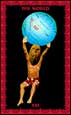
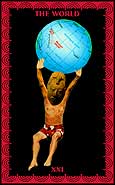 | The card at the top of the cross represents your goal, or the best you can achieve without a dramatic change of priorities. The World: Completeness and intricacy of design. A great work. Achievement, reward, and well-earned recognition. A time of success, prosperity, security and joy. May also indicate travel or a change in residence. |
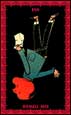
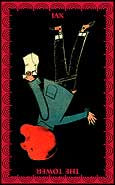 | The card at the bottom of the cross represents the foundation on which the situation is based. The Tower, when reversed: Unexpected upheaval leading to a positive change in life. Catastrophe survived or narrowly avoided. A new lifestyle and enlightenment. May indicate a broken relationship, divorce, or failure in business or career. |
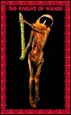
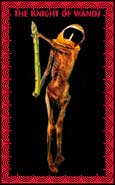 | The card at the left of the cross represents a passing influence or something to be released. Knight of Wands: The essence of fire, such a great conflagration. One filled with vitality and passion for life. A sexy and exciting person, daring in their actions, cocky in their attitude, and utterly without fear. Absolute sincerity, coupled with violent emotions that swing wildly from one extreme to another. Boundless creativity and lust for a change of both pace and place. The rapid approach, or more likely departure, of something that sets your world ablaze. Often suggests travel or escape. |
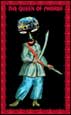
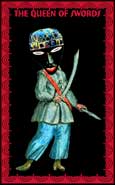 | The card at the right of the cross represents an approaching influence or something to be embraced. Queen of Swords: The essence of air behaving as water, such as a refreshing mist: A person gifted with both keen logic and natural intuition, giving them uncanny powers of perception and insight. One who easily sees past deception and confusion to the heart of a matter, and understands both sides of any argument. The embodiment of calm, forthrightness, and wit, in the face of even the most trying circumstances. |
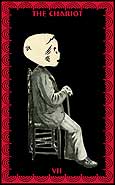 | The card at the base of the staff represents your role or attitude. The Chariot: Victory through might. Advancement through bold action. Change through force. Order established through vigilance. A trying situation mastered by balancing opposing forces against each other. Discipline, individual effort and endurance will turn the tide. |
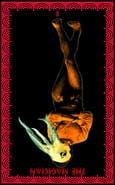 | The card second from the bottom of the staff represents your environment and the people you are interacting with. The Magician, when reversed: Trickery, demagoguery, and artful deceptions. The use of knowledge and skill for selfish gain or destructive purposes. The abuse of technology. Incompetence and uncertainty. A lack of will power. A fatal flaw in a great work. |
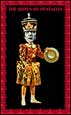
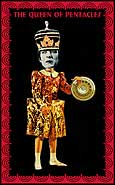 | The card second from the top of the staff represents your hopes, fears, or an unexpected element that will come into play. Queen of Pentacles: The essence of earth behaving as water, such as a hot spring: A warm and generous host, providing shelter and comfort for all who would seek it. A person steadfast, practical, and domestic, able to create opulence and stability in any setting. The qualities of maturity and sensibility, coupled with an innate appreciation for nature and the material world. |
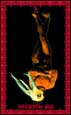
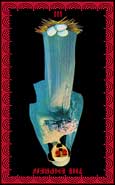 | The card at the top of the staff represents the ultimate outcome should you continue on this course. The Empress, when reversed: Stifling matriarchal influence. Unhappiness, selfishness, poverty and disruption of the home or family. Indecision, paranoia, and jealous rage. Sterility. |
|
|