| The Two Paths spread provides insight into an important decision ahead of you, the possible outcomes, and the forces that draw you towards each of these outcomes. The William Blake Tarot explores the mystical vision and artistry of the renowned English painter and poet. Through rich interpretations focused on creative undertakings, it has long been the deck of choice for artists, writers, musicians, and thinkers. For more information about this deck, or to buy your own personal copy, go to www.blaketarot.com.
|
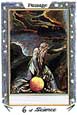
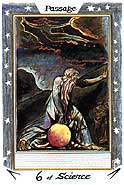 | The top left card represents the first possible outcome. Six of Science (Passage): Opening the way or clearing obstacles. Movement of information. A Rite of Passage. A stressful journey. Seeking a sense of purpose. Receiving guidance from a higher source. Exploring new terrain. In the creative process: Your imagination needs to be uncovered or unleashed by resolving contradictory elements and seeking spiritual guidance. |
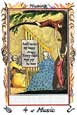
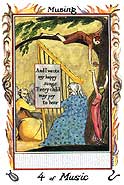 | The top right card represents the second possible outcome. Four of Music (Musing): "And I wrote my happy songs / Every child may joy to hear". Being at peace with yourself. Taking the time to reminisce and let your mind wander. Relief from emotional stress. Combining business with pleasure. Focus on playful communication. Mulling things over. Relaxed and slow pace. In the creative process: Relax into playfulness, whimsically experiment with improvisation or reminiscence about past experiences. Such meditations alleviate stress and refresh the imagination. Make space for the gifts of spirit to move through you. |
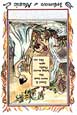
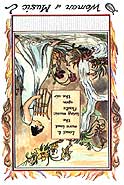 | The middle left card represents the force drawing you towards the first possible outcome. Woman of Music, when reversed: Obsession with the illusion of beauty, grace, and tranquility in your surroundings. Undue attention to the emotions and needs of people around you. False belief in your own talents and charm. Being haunted by loneliness and dreams. Inhibitions blocking your expression of ideas and feeling. Over-sensitivity to criticism. In the creative process: You vibrate in tune with everything around you, sensitively aware of life energy in all its forms, from which to create something new through the filter of your own consciousness. |
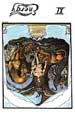
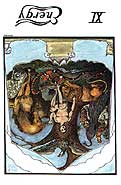 | The middle right card represents the force drawing you towards the second possible outcome. Energy, when reversed: Intoxication with vitality and lust for life. Reliance on physical strength and endurance rather than wit and reason. Being blinded by your natural instincts. Seeking in vain for animal or totem forces as allies. Being imprisoned by language, as the Tower of Babel. Irrationality and stubbornness. |
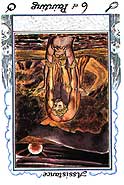 | The bottom card represents the critical factor that decides what will come to pass. Six of Painting (Assistance), when reversed: Reliance on favors or tangible help of some kind. Restrictive influences from sponsorship or patronage. A negative influence in the situation. Being "kept". The illusion of generosity. Charity with strings attached. Taking advantage of those in need. In the creative process: You can attract the assistance and tools you need by using your imagination and not giving up hope. |