| The Hagall spread is a tool for revealing the path of spiritual growth in difficult situations. It is a favorite of mystics and those confronting a major life challenge. The Ator Tarot is a smart and whimsical spin on Rider Waite symbolism. The clunky and adorable characters of the Ator Tarot make it the deck of choice for those seeking a refreshing approach to divination. If you would like your own copy of the Ator Tarot, you can buy it now! |
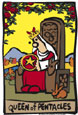
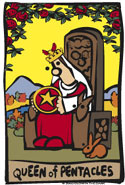 | The card in the middle of the circle represents the core or central issue of the situation. Queen of Pentacles: The essence of earth behaving as water, such as a hot spring: A warm and generous host, providing shelter and comfort for all who would seek it. A person steadfast, practical, and domestic, able to create opulence and stability in any setting. The qualities of maturity and sensibility, coupled with an innate appreciation for nature and the material world. |
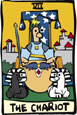
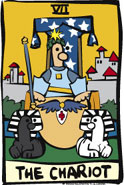 | The card at the bottom of the circle represents something you did to bring the situation about. The Chariot: Victory through might. Advancement through bold action. Change through force. Order established through vigilance. A trying situation mastered by balancing opposing forces against each other. Discipline, individual effort and endurance will turn the tide. |
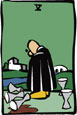
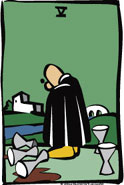 | The card at the bottom left of the circle represents your beliefs, impressions, or expectations. Five of Cups (Disappointment): Suffering a loss and wishing for what might have been. Being crippled by sadness, grief, and vain regret. Indecision brought on by the feeling that you made the wrong choice. Ignoring what you still have. May suggest a broken relationship or tragedy. May also suggest a gift, inheritance, opportunity, partnership, or marriage, but one that falls below expectations. |
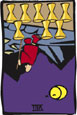
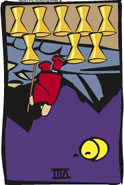 | The card at the bottom right of the circle represents the most likely outcome of the situation given present circumstances. Eight of Cups (Indolence), when reversed: The realization that a matter thought to be important was actually of little consequence. Moving on from something in which you had invested great love and devotion. The start of an inner journey to find higher aspects of life. Reflection on what is truly fulfilling in life. |
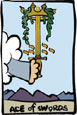
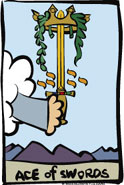 | The card at the upper left of the circle represents the spiritual history of the situation the things you've learned. Ace of Swords: The seed of victory - perhaps as yet unseen. A challenge to be met and solved through the invocation of force. An opportunity to bring reason and intelligence to bear in the pursuit of justice and truth. An excessive power that must not be abused. May suggest new ideas or information that can reveal a solution to the problem at hand. |
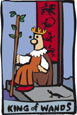
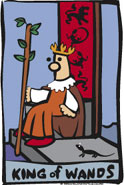 | The card at the top of the circle represents the spiritual tasks and challenges of the present situation. King of Wands: The essence of fire behaving as air, such as lightning: A great and daring leader who inspires others to rise to challenges alongside him. An artist who can take hold of an idea and make it a reality through bold action. One who is forceful, charismatic, and honest, leading by example, but unafraid to invest authority in others. A dashing and magnetic personality, carrying authority naturally, and striking at the world with swiftness and grace. |
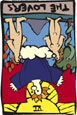
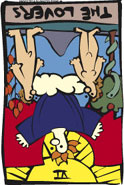 | The card at the upper right of the circle represents the metamorphosis of the spiritual situation, and how your knowledge will evolve. The Lovers, when reversed: Inner strife, frustration, suspicion, and disagreements in a relationship. Irresponsibility and indecision. Avoiding true intimacy in favor of lust. Unfaithfulness. |
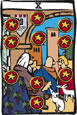
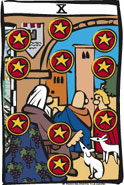 | The card at the left of the lower line represents the person or qualities that will sustain your spiritual journey. Ten of Pentacles (Wealth): Completion of material prosperity and riches. Freedom from financial anxiety, the security of home, and the enjoyment of family. The passing of inheritance along to children, or the gaining of inheritance from parents. |
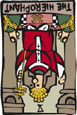
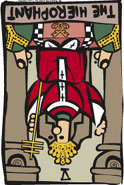 | The card in the middle of the lower line represents the qualities that you express in this circumstance. The Hierophant, when reversed: Authoritarianism. Inflexible and dogmatic thinking. A calcified old regime. Bad or incompetent advice. Inability to hear a higher or inner voice, or pretending to hear it for personal gain. |
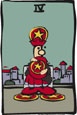
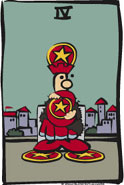 | The card at the right of the lower line represents the person or qualities that will reveal spiritual knowledge. Four of Pentacles (Power): Cleaving to earthly power in the desperate fear that it will be lost. Making yourself an obstacle to progress due to lack of originality and a desperate fear of change. Believing that security and identity are based primarily on the possession of material things. Coveting things and people. Living in a cloud of suspicion and prejudice. |