| The Fourfold Vision spread offers a progression of different ways of looking at an object, person, or situation. It is a powerful tool for gaining deeper insight into the specific subjects of other readings. The Marseilles Tarot is an 18th century creation of obscure origins. It predates the occult symbolism of the Rider Waite deck by roughly 200 years, giving the readings a unique and rustic flavor. Many swear by this deck as the true oracle of the common man. If you would like your own copy of the Marseilles Tarot, you can buy it now! |
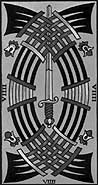 | The card on the far right represents the object being viewed, be it an idea, relationship, or the self. Nine of Swords (Cruelty): Debilitating mental anguish or ill health. Being dragged down by the dishonor of others. Participation in a shameful or regrettable act. Inescapable guilt, mistrust, and doubt. May indicate a death or other catastrophic loss. |
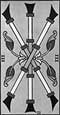
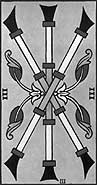 | The card second from the right represents the physical vision: how the object is seen at a base or mechanical level. Three of Batons (Virtue): Personal fortitude and strength of character. Accumulated power set in motion towards a distant goal. The initiation of an enduring partnership based on absolute trust. Honor maintained in a time of desperate struggle. Taking full responsibility for a decision, and bearing the solitude of leadership. |
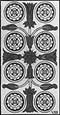
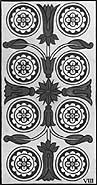 | The card in the middle represents the mental vision: the object personified and seen through a humanized perspective. Eight of Coins (Prudence): Dedicating yourself fully to a task. Learning a new craft or skill. Applying painstaking attention to detail. Industriousness and the efficient completion of tasks. Sticking with a project long enough to see it through. |
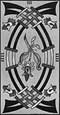
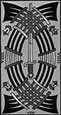
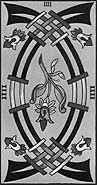 | The card second from the left represents the emotional vision: how passions and values are creatively stimulated by the mental vision. Four of Swords (Truce), when reversed: Restlessness and mental disharmony. Deserting a struggle in progress. A temporary retreat from stress that turns into a permanent rout. A lack of vigilance that could lead to disaster. |
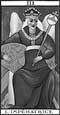
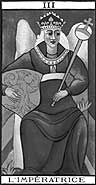 | The card on the far left represents the fourfold or mystical vision: still viewing through the previous three, we now add a spiritual element, revealing unseen aspects of the object. L'Imperatrice (The Empress): The essence of femininity and matriarchy. Creativity, productivity, and the foundation of civilization. Initiative and practical actions that promote prosperity, comfort and luxury. Fruitfulness and motherhood. |