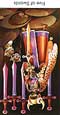
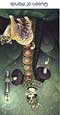
| The Hagall spread is a tool for revealing the path of spiritual growth in difficult situations. It is a favorite of mystics and those confronting a major life challenge. The Cat People Tarot paints a picture of faraway lands trod by mystical archetypes and their feline companions. This deck is a perfect tool for dreamers and idealists, and is a great choice for divining the nature of human imagination. If you would like your own copy of the Cat People Tarot, you can buy it now! |
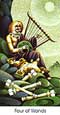
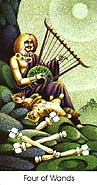 | The card in the middle of the circle represents the core or central issue of the situation. Four of Wands (Completion): Romance. Society. Harmony. Newly acquired prosperity. Peace. Tranquility. The fruits of labor. Rest after strife. |
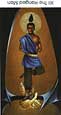
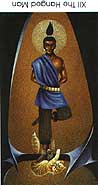 | The card at the bottom of the circle represents something you did to bring the situation about. The Hanged Man, when reversed: Lack of sacrifice. Unwillingness to make the necessary effort. failure to give one's self. Preoccupation with the ego. False prophecy. Useless sacrifice. |
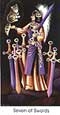
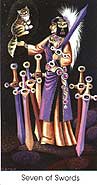 | The card at the bottom left of the circle represents your beliefs, impressions, or expectations. Seven of Swords (Futility): New plans. Wishes. Fortitude. Perseverance. Hope. Confidence. Fantasy. Design. |
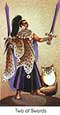
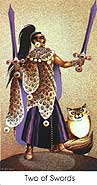 | The card at the bottom right of the circle represents the most likely outcome of the situation given present circumstances. Two of Swords (Peace): Balance force. Harmony. Firmness. Concord. Offsetting factors. Stalemate. Affection. |
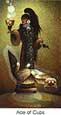
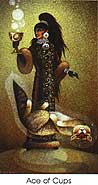 | The card at the upper left of the circle represents the spiritual history of the situation the things you've learned. Ace of Cups: Great abundance. Fulfillment. Perfection. Joy. Fertility. Opulence. Fullness. Happiness. Productiveness. Beauty and pleasure. Goodness overflowing. Favorable outlook. |
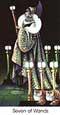
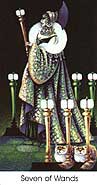 | The card at the top of the circle represents the spiritual tasks and challenges of the present situation. Seven of Wands (Valor): Success. Gain. Overcoming obstacles and challenges. Advantage. Victory. |
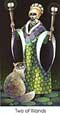
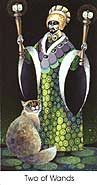 | The card at the upper right of the circle represents the metamorphosis of the spiritual situation, and how your knowledge will evolve. Two of Wands (Dominion): Mature individual. Ruler. Attainment of goals and needs. Boldness. Courage in undertakings. A dominant personality. |
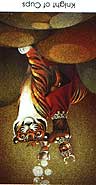 | The card at the left of the lower line represents the person or qualities that will sustain your spiritual journey. Knight of Cups, when reversed: Subtlety. Artifice. Trickery. Deception. Fraud. A sly and cunning person. A person capable of swindling. |
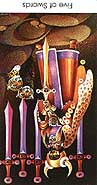 | The card in the middle of the lower line represents the qualities that you express in this circumstance. Five of Swords (Defeat), when reversed: Uncertain outlook. Chance of loss or defeat. Weakness. Possible misfortune befalling a friend. Seduction. Burial. |
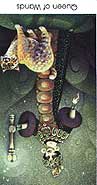 | The card at the right of the lower line represents the person or qualities that will reveal spiritual knowledge. Queen of Wands, when reversed: Jealousy. deceit. Possible infidelity. Unstable emotions, Fickleness. Resistance. Obstacles. Opposition. |