| The Celtic Cross spread is one of the most popular Tarot spreads, providing varied insight into many aspects of a complex situation and your role in it. The Haindl Tarot weaves a tapestry of haunting beauty from the traditions of Native America, the Holy Grail, the I Ching, Kabbalah and the Norse Runes, and is the deck of choice for mystics and those seeking enlightenment. If you would like your own copy of the Haindl Tarot, you can buy it now! |
 | The card not shown but at the center of the cross, represents the atmosphere surrounding the central issue. The Devil: Something exciting, possibly dangerous or forbidden. Temptation. Physical gratification. Exploring darker feelings. Wild action opens up new areas in life. |
 | The card visible at the center of the cross represents the obstacle that stands in your way - it may even be something that sounds good but is not actually to your benefit. The Sun: Joy and simplicity. Life is wonderful. Energy. Activity, excitement, optimism. Rational approach. Confidence. Sexual desire. |
 | The card at the top of the cross represents your goal, or the best you can achieve without a dramatic change of priorities. Three of Swords (Mourning): Oppressive situations. Mourning. Sorrow. |
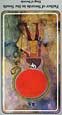
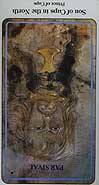 | The card at the bottom of the cross represents the foundation on which the situation is based. Son of Cups (Parsival), when reversed: Avoiding responsibility. Callousness. |
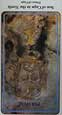
 | The card at the left of the cross represents a passing influence or something to be released. Aeon, when reversed: Rebirth. Resisting change. A new life, possibly not acknowledged. |
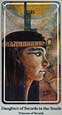
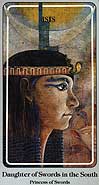 | The card at the right of the cross represents an approaching influence or something to be embraced. Daughter of Swords (Isis): A powerful figure, confident and dynamic. |
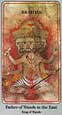
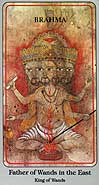 | The card at the base of the staff represents your role or attitude. Father of Wands (Brahma): A calm person, possibly stuffy. A rooted quality that gives strength. |
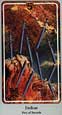
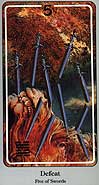 | The card second from the bottom of the staff represents your environment and the people you are interacting with. Five of Swords (Defeat): An overwhelming situation. Need to hold onto principles until the time comes to make a change. |
 | The card second from the top of the staff represents your hopes, fears, or an unexpected element that will come into play. Four of Swords (Truce), when reversed: Movement away from silence and peace. New beginnings or old troubles. |
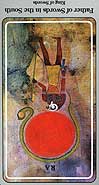 | The card at the top of the staff represents the ultimate outcome should you continue on this course. Father of Swords (Ra), when reversed: Tyrant. A person jealous of personal power. |