| The Two Paths spread provides insight into an important decision ahead of you, the possible outcomes, and the forces that draw you towards each of these outcomes. The Sola Busca Tarot is a color embellished reproduction of the only known extant 15th century Tarot deck engraved on metal. It is the choice of purists and those seeking a direct channel with the dawn of Western occultism. |
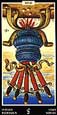
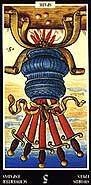 | The top left card represents the first possible outcome. 5 Spade (Defeat), when reversed: Refusing to achieve success through personal degradation. Friendship maintained through the abandonment of a dishonorable gain. Slander and infamy avoided. |
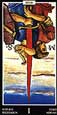
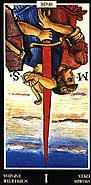 | The top right card represents the second possible outcome. 1 Spade (Ace of Swords), when reversed: The seed of defeat - perhaps as yet unseen. A challenge met with the invocation of force, leading to disastrous results. Reason and intelligence misdirected or cast aside, resulting in injustice and falsehood. An excessive power abused. May suggest new ideas or information with dangerous implications. |
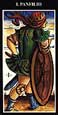
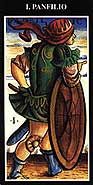 | The middle left card represents the force drawing you towards the first possible outcome. Panfilio (The Magician): Mastery over word, mind, and matter. The ability to turn ideas into actions, handle problems, and control one's life. The initiation of new projects, great works, or a new way of life. Eloquent and moving communication. Arcane and eldritch technologies. |
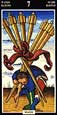
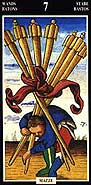 | The middle right card represents the force drawing you towards the second possible outcome. 7 Mazze (Valor): Standing courageously for your beliefs in the face of adversity. Fear of failure overcome by the will to succeed. Great obstacles met with heroism and determination. Inner strength brought to bear at a critical moment. |
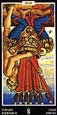
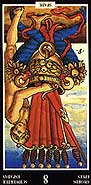 | The bottom card represents the critical factor that decides what will come to pass. 8 Spade (Interference), when reversed: Learning a valuable lesson from the unexpected consequences of prior decisions. Narrowly escaping criticism, censure, and the imposition of external restrictions. Focusing on the crux of a problem and freeing oneself from a difficult situation. Coming to grips with a past failure or humiliation and moving on. |