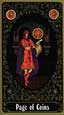
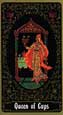
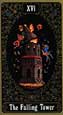
| The Three Fates spread is an exceptionally popular way to gain insight into the emerging arc of the past, present, and future. The Russian Tarot of Saint Petersburg is the final commissioned work of Yuri Shakov, a master in the lost art of Russian miniature painting. The rich, dark images lend themselves to questions regarding the struggle of the human spirit in trying times. If you would like your own copy of the Russian Tarot of Saint Petersburg, you can buy it now! |
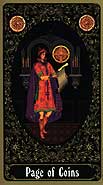 | The left card represents an important element of the past. Page of Coins: Deep concentration and application. Scholarship. Reflection. Desire for new ideas. A do-gooder. Bearer of news. |
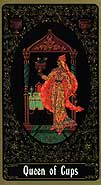 | The middle card represents a deciding element of the present. Queen of Cups: A warm-hearted and fair person. Beloved and adored. Good friend and mother. Devoted wife. Practical. Honest. Loving and intelligent. Gift of vision. |
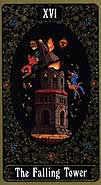 | The right card represents a critical element of the future. The Falling Tower: Complete and sudden change. Breakdown of old beliefs. Abandonment of past relationships. Severing of a friendship. Changing one's opinion. Unexpected events. Bankruptcy. Downfall. Loss of stability. Loss of security. |