| The Celtic Cross spread is one of the most popular Tarot spreads, providing varied insight into many aspects of a complex situation and your role in it. The William Blake Tarot explores the mystical vision and artistry of the renowned English painter and poet. Through rich interpretations focused on creative undertakings, it has long been the deck of choice for artists, writers, musicians, and thinkers. For more information about this deck, or to buy your own personal copy, go to www.blaketarot.com.
|
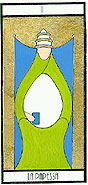
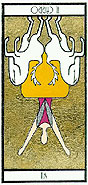
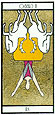
 | The card not shown but at the center of the cross, represents the atmosphere surrounding the central issue. Woman of Music, when reversed: Obsession with the illusion of beauty, grace, and tranquility in your surroundings. Undue attention to the emotions and needs of people around you. False belief in your own talents and charm. Being haunted by loneliness and dreams. Inhibitions blocking your expression of ideas and feeling. Over-sensitivity to criticism. In the creative process: You vibrate in tune with everything around you, sensitively aware of life energy in all its forms, from which to create something new through the filter of your own consciousness. |
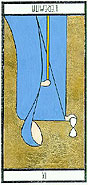
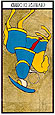
 | The card visible at the center of the cross represents the obstacle that stands in your way - it may even be something that sounds good but is not actually to your benefit. Whirlwind, when reversed: Winds of change make old visions obsolete. An act of god or stroke of bad luck. Inner turmoil cleverly disguised but unrestrained. Getting the run-around. Reaching a turning point. A good time to honor your gods. |
 | The card at the top of the cross represents your goal, or the best you can achieve without a dramatic change of priorities. Six of Science (Passage): Opening the way or clearing obstacles. Movement of information. A Rite of Passage. A stressful journey. Seeking a sense of purpose. Receiving guidance from a higher source. Exploring new terrain. In the creative process: Your imagination needs to be uncovered or unleashed by resolving contradictory elements and seeking spiritual guidance. |
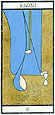
 | The card at the bottom of the cross represents the foundation on which the situation is based. Two of Painting (Balance), when reversed: A choice regarding something tangible or physical. Lack of harmony. Negotiation spiraling out of control. Stretching your abilities to reconcile differences well beyond their limits. In the creative process: A breach in the project requires inner strength and timely decisions; stick with the task and seek cooperative assistance. |
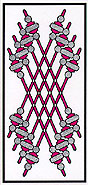
 | The card at the left of the cross represents a passing influence or something to be released. Four of Painting (Means), when reversed: Obsession with material prosperity and contentment. Attachment to money and material goods. Creative achievements blocked by lack of material resources. Consolidation of personnel and materials at the expense of the objective at hand. Overwhelming need for order and structure. Emphasis on controlling, dominating, or monopolizing. In the creative process: Before reaching out for creative inspiration, prepare the groundwork: by appropriately allocating your resources and assigning creative tasks. |
 | The card at the right of the cross represents an approaching influence or something to be embraced. Eight of Music (Discontent), when reversed: Freedom from disappointment and dissatisfaction. The release of repressed emotions and distress. Being unphased by circumstances. Emotional stability in the face of challenge. Serenity. In the creative process: Psychodrama and emotional torments can serve as imaginative stimulants. Expressing and documenting what you feel can be artful as well as healing. |
 | The card at the base of the staff represents your role or attitude. Angel of Painting: "The Graphic Muse". Visionary reverie. Coalescing plans and agendas in your imagination. Contemplation prior to action. Making use of appropriate tools. Getting an overview of the situation, particularly regarding its physical or material aspects. "Getting the feel" of things. In the creative process: Look for or contemplate a solid idea, a practical point of view that can instigate a whole new direction in your work or project. |
 | The card second from the bottom of the staff represents your environment and the people you are interacting with. Two of Poetry (Individuality): "Every Mans Wisdom is peculiar to his own Individuality". Making choices based on personal perception. Evaluating the appearances of things. Exploring alternative ways of looking at a situation. Looking beyond ego-concerns to spiritual ones. Searching for self-knowledge. Deciding between societal and individual points of view. In the creative process: Distinguish between the expression of your Self and the expression of your ego; discover the difference between wise individuality and unwise individualism. |
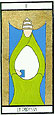
 | The card second from the top of the staff represents your hopes, fears, or an unexpected element that will come into play. Reason: Using your head to get through a situation. A time to define or obey the rules. Yielding to or being the boss, or authority figure. Patriarchal or traditional approach is favored. Fathering issues. |
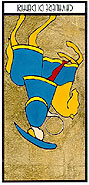
 | The card at the top of the staff represents the ultimate outcome should you continue on this course. Experience: Wanting to be in control of your instincts, emotions, or elemental forces. Taking the reins in the situation. Goal-oriented drive to succeed. Journeys or involvement with motion and mobility. Meeting challenges head on. |