Today's Tarot for Monica Potter
| The Cross and Triangle spread is a powerful means of understanding complex situations, developed by the Hermetic Order of the Golden Dawn. This spread is rich in occult and mystical symbolism, and one of our favorites here at Facade. The William Blake Tarot explores the mystical vision and artistry of the renowned English painter and poet. Through rich interpretations focused on creative undertakings, it has long been the deck of choice for artists, writers, musicians, and thinkers. For more information about this deck, or to buy your own personal copy, go to www.blaketarot.com.
|
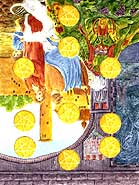
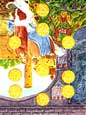
 | The first card, the significator, is placed in the center of the cross. This card represents the prime energy manifest in your life. Five of Music (Melancholy): "Whatever is Born of Mortal Birth / Must be consumed with the Earth / To rise from Generation free: / Then what have I to do with thee?". Emotional disappointment. Existential angst. Spiritual insights following a sad event. Separating and moving on. Sadness, loss, grieving. Acknowledging your mistakes. Releasing ties and attachments from the past. In the creative process: Convert the pain of disappointment or loss into artistic expression. Let go of something old or dead and move on to something new and alive. |
 | The second card, placed above the significator, represents Air. It describes your spirit, process of thought, and the influence of reason. Ace of Painting (Generation): A tangible impetus to creative action. Generating new forms. Putting your plan into action. New projects and works. A provocative opening. Powerful elements of sensuality and sexuality coming into play. Focus on fertility and virility. In the creative process: This is when you tap into the elemental and generative forces of life, using your inner vision to create new and exciting forms with which to work. |
 | The third card, placed to the right of the significator, represents Fire. It describes your motivations, creative energies, and the influence of passion. Imagination: A murky situation requires wisdom and prudence. Allow your beliefs and convictions to guide you through the door of perception. Use your imagination to illuminate the unknown. Finding an answer or solution through introspection. Putting your own light and wisdom into action. Evoking the divine imagination as a transformative force in your own life. |
 | The fourth card, placed below the significator, represents Water. It describes your emotions, meditations, and the influence of love. Transformation: Eliminating something old to make room for something new. A major change or metamorphosis is at hand. Renewal. Preparing for the future. Letting-go is advised, even if difficult. Acceptance of what is inevitable. Cutting your losses. Stripping away the excess or superfluous. |
 | The fifth card, placed to the left of the significator represents Earth. It describes your physical presence, position in life, and the influence of the material world. Ace of Poetry (Inspiration): "I come in Self-annihilation & the grandeur of Inspiration / To cast of Rational Demonstration by Faith in the Saviour / To cast off the rotten rags of Memory by Inspiration / To cast aside from Poetry all that is not Inspiration". The kiss of divine inspiration. Receiving an impetus to creative action. Getting in touch with higher consciousness or Spirit. Experiencing a personal vision of truth, beauty, ecstasy. Discovering sexuality as a metaphor for imaginative experience. Sense of being guided by a higher force. The "Yes!" card. A soulful new beginning. In the creative process: Being in contact with the purest and highest part of your being provides the impetus for fresh expressions in both art and life. |
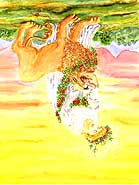
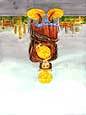
 | At this point the cross is complete and the triangle is formed. The sixth card, placed on the bottom left of the triangle represents one of two opposing forces. Woman of Science, when reversed: Overly-methodical approach to a problem. Looking outside yourself for answers that can only be found within. Being confused by the facts and failing to see the truth. Refusing counsel. Dogmatic reliance on deduction over induction. Shunning personal involvement. In the creative process: Now is the time to research and gather information, get an overview, and make long-range plans and strategies. |
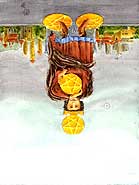
 | The seventh card, placed on the bottom right of the triangle represents the force that opposes the bottom left card. These forces may be external, but they are frequently one's own inner archetypes in conflict. Woman of Painting, when reversed: Bureaucracy and administration to the exclusion of the creative. The pursuit of tangible rewards at all costs. Team building and cooperative efforts where a single vision is required. Supporting and acknowledging others for political gain. Infatuation with the shallow. In the creative process: Your creative ideas are now taking tangible form, assisted by good use of your available resources and personnel. |
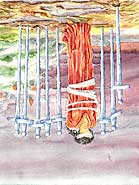
 | The eighth card, the reconciler, is placed below the cross in the third vertex of the triangle. This is the force that will resolve the conflict between the bottom left and bottom right cards. By meditating on this force and bringing more of it into your life, you can bring the matter at hand to a swifter conclusion than would naturally occur. Nine of Science (Despair): Experiencing mental anguish or self-pity. Grief. Depression. Insomnia. Escaping reality. Hiding from joy and innocence. Feeling isolated and alone. Self-cruelty. In the creative process: Your creativity is blocked by self-judgments and criticism. Forgive yourself and get back to the basics; recapture your innocence and rejoin the human family. |
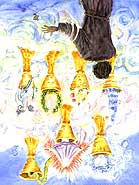
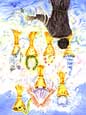
 | The ninth and final card, placed in the center bottom of the triangle, represents the final outcome unless you change course. Eight of Music (Discontent), when reversed: Freedom from disappointment and dissatisfaction. The release of repressed emotions and distress. Being unphased by circumstances. Emotional stability in the face of challenge. Serenity. In the creative process: Psychodrama and emotional torments can serve as imaginative stimulants. Expressing and documenting what you feel can be artful as well as healing. |
|
|