Today's Tarot for Muhammad Ali
| The Fourfold Vision spread offers a progression of different ways of looking at an object, person, or situation. It is a powerful tool for gaining deeper insight into the specific subjects of other readings. The Phoenix Tarot is one of the most strikingly beautiful decks of the 20th century. Through vibrant colors and stylized images, it breathes new life into the familiar symbology of the Tarot. If you would like your own copy of the Phoenix Tarot, you can buy it now! |
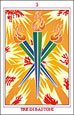
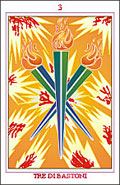 | The card on the far right represents the object being viewed, be it an idea, relationship, or the self. Three of Wands (Virtue): Personal fortitude and strength of character. Accumulated power set in motion towards a distant goal. The initiation of an enduring partnership based on absolute trust. Honor maintained in a time of desperate struggle. Taking full responsibility for a decision, and bearing the solitude of leadership. |
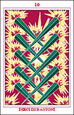
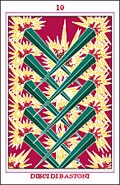 | The card second from the right represents the physical vision: how the object is seen at a base or mechanical level. Ten of Wands (Oppression): Success and gain, leading you to take on a burden greater than you can carry. Noble leadership transformed, through lack of restraint, into tyranny. The crushing weight of ultimate responsibility. Having spent their fuel, the engines of creation grind to a halt. |
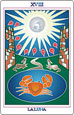
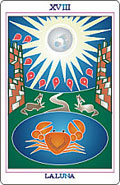 | The card in the middle represents the mental vision: the object personified and seen through a humanized perspective. The Moon: Cyclic transformation covering the mysterious forces of the night. Feminine beauty and the intoxicating vitality of youth. The metamorphosis from beauty to beast and vice versa. Occult forces, sensitivities and intense dreams. Dangerous situations and perilous times. |
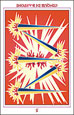
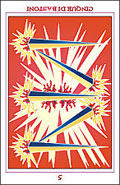 | The card second from the left represents the emotional vision: how passions and values are creatively stimulated by the mental vision. Five of Wands (Strife), when reversed: Pointless struggles motivated by the vain pursuit of recognition, financial reward, or base desires. Disunity, chaos, and petty quarreling at a time of crisis. A stressful situation that brings out the worst in the participants. |
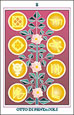
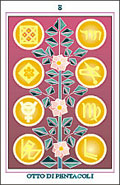 | The card on the far left represents the fourfold or mystical vision: still viewing through the previous three, we now add a spiritual element, revealing unseen aspects of the object. Eight of Pentacles (Prudence): Dedicating yourself fully to a task. Learning a new craft or skill. Applying painstaking attention to detail. Industriousness and the efficient completion of tasks. Sticking with a project long enough to see it through. |
|
|