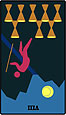
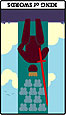
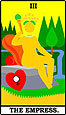
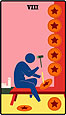
| The Celtic Cross spread is one of the most popular Tarot spreads, providing varied insight into many aspects of a complex situation and your role in it. The International Icon Tarot renders traditional occult symbolism in Swiss iconography. It is a humorous and direct approach to divination, and one of our favorite new decks. If you would like your own copy of the International Icon Tarot, you can buy it now!
|
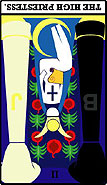 | The card not shown but at the center of the cross, represents the atmosphere surrounding the central issue. The High Priestess, when reversed: Being confused and led astray from the true path. Spiritual deception. Overzealous and shallow-minded pursuit of the esoteric. Insecurity, conceit and self-destructiveness. The forces of nature unleashed. |
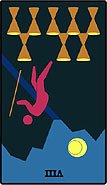 | The card visible at the center of the cross represents the obstacle that stands in your way - it may even be something that sounds good but is not actually to your benefit. Eight of Cups (Indolence), when reversed: The realization that a matter thought to be important was actually of little consequence. Moving on from something in which you had invested great love and devotion. The start of an inner journey to find higher aspects of life. Reflection on what is truly fulfilling in life. |
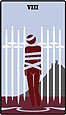
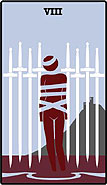 | The card at the top of the cross represents your goal, or the best you can achieve without a dramatic change of priorities. Eight of Swords (Interference): Chagrin at the unforeseen consequences of prior decisions. Criticism, censure, and the imposition of external restrictions. Confusion leading to powerlessness. Inability to focus on the crux of a problem and free oneself from a difficult situation. Being hamstrung by a past failure or humiliation. |
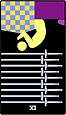
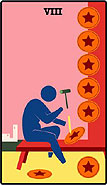 | The card at the bottom of the cross represents the foundation on which the situation is based. Eight of Pentacles (Prudence): Dedicating yourself fully to a task. Learning a new craft or skill. Applying painstaking attention to detail. Industriousness and the efficient completion of tasks. Sticking with a project long enough to see it through. |
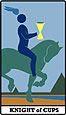
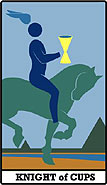 | The card at the left of the cross represents a passing influence or something to be released. Knight of Cups: The essence of water behaving as fire, such as a rushing river: A passionate romantic, full of charm and beauty, but prone to extremes. Forceful idealism blended with gentle kindness. An eager and intense person, forward with their emotions and tender in their support of others. |
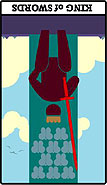 | The card at the right of the cross represents an approaching influence or something to be embraced. King of Swords, when reversed: The dark essence of air, such as a gray sky: A mature leader of unyielding ethics and absolute authority. An incorruptible judge, whose devotion to the letter of the law cannot be swayed by emotion, mercy, or exigent circumstances. Perfect clarity of thought, excessive use of force, and mastery of language as a tool for deception. One who, like a great tyrant, inspires not love or devotion, but fear, respect, and obedience. |
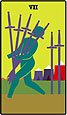
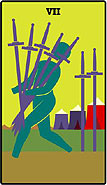 | The card at the base of the staff represents your role or attitude. Seven of Swords (Futility): An opportunity to withdraw from a hopeless situation and fight another day. Disengagement from a struggle you should never have been involved in. A desperate attempt to resolve a matter without conflict. The use of cleverness or outright deception to turn the tide in your favor. |
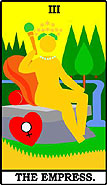 | The card second from the bottom of the staff represents your environment and the people you are interacting with. The Empress: The essence of femininity and matriarchy. Creativity, productivity, and the foundation of civilization. Initiative and practical actions that promote prosperity, comfort and luxury. Fruitfulness and motherhood. |
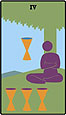
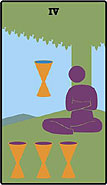 | The card second from the top of the staff represents your hopes, fears, or an unexpected element that will come into play. Four of Cups (Luxury): Being surrounded by love and devotion but taking it for granted. Ignoring the real and longing for the indefinable. Apathy and disengagement from the world. Dissatisfaction with the condition and direction of affairs, but the inability to accept new opportunities. |
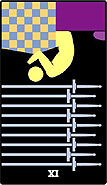 | The card at the top of the staff represents the ultimate outcome should you continue on this course. Nine of Swords (Cruelty), when reversed: Mental anguish or ill health endured and overcome. Refusal to be dragged down by the dishonor of others. Attempting to avert a shameful or regrettable act. Faithfulness, patience and unselfishness. May indicate the narrow avoidance of a death or other catastrophic loss. |