Today's Tarot for Nicholas Copernicus
| The Relationship spread provides insight into the interaction between two people or entities. It is the spread of choice for questions about partnerships, be they in romance or business. The Rider Waite Tarot is the most widely recognized Tarot deck, and the first deck published in the 20th century. It was created by members of the Hermetic Order of the Golden Dawn, and is especially suited to questions of a mystical nature. If you would like your own copy of the Rider Waite Tarot, you can buy it now! |
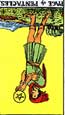
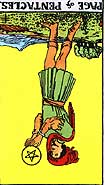 | The card at the top left represents how you see yourself. Page of Pentacles, when reversed: The dark essence of earth, such as a chasm: Unfavorable news about business, finance, or the physical world. One who delights in all forms of luxury and physical excess, leaving practical matters unattended. Irrationality and failure to recognize obvious facts, coupled with a poor work ethic. Wastefulness, lack of focus, and loss. May portend the loss of a job or promotion. |
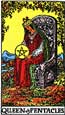
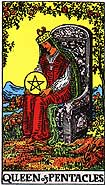 | The card at the top right represents how you see your partner. Queen of Pentacles: The essence of earth behaving as water, such as a hot spring: A warm and generous host, providing shelter and comfort for all who would seek it. A person steadfast, practical, and domestic, able to create opulence and stability in any setting. The qualities of maturity and sensibility, coupled with an innate appreciation for nature and the material world. |
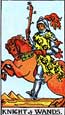
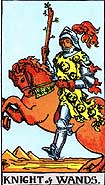 | The card in the center left represents how you feel about your partner. Knight of Wands: The essence of fire, such a great conflagration. One filled with vitality and passion for life. A sexy and exciting person, daring in their actions, cocky in their attitude, and utterly without fear. Absolute sincerity, coupled with violent emotions that swing wildly from one extreme to another. Boundless creativity and lust for a change of both pace and place. The rapid approach, or more likely departure, of something that sets your world ablaze. Often suggests travel or escape. |
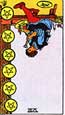
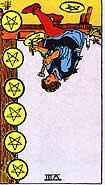 | The card in the center right represents what stands between you and your partner. Eight of Pentacles (Prudence), when reversed: Undue attention to small details at the expense of the big picture. Losing yourself in your work, to the detriment of your personal and spiritual life. Making the same mistake repeatedly. Refusing to learn new crafts or skills. |
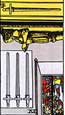
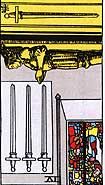 | The card in the lower left represents how your partner sees you. Four of Swords (Truce), when reversed: Restlessness and mental disharmony. Deserting a struggle in progress. A temporary retreat from stress that turns into a permanent rout. A lack of vigilance that could lead to disaster. |
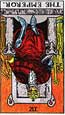
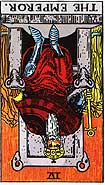 | The card in the lower right represents what your partner feels about you. The Emperor, when reversed: Weakness in character leading to tyranny and abuse of worldly power. Loss of confidence and ambition, coupled with the cold execution of the unthinkable. The inability to carry out plans or command respect. Being unreasonable and prone to fits of rage. A deceiver or demagogue. |
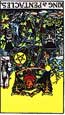
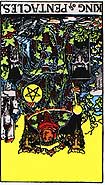 | The card in the center represents the present status or challenge of the relationship. King of Pentacles, when reversed: The dark essence of earth behaving as air, such as a diamond: An unyielding businessman, with a gift for identifying weakness and exploiting it for personal gain. One well informed about material affairs, but ignorant of larger, more pressing issues. A blind devotee of business as usual, unconcerned with the unintended results, and contemptuous of new ideas. A person full of greed and avarice, easily corrupted by luxury or the temptations of the flesh. |
|
|