Today's Tarot for Nick Nolte
| The Cross and Triangle spread is a powerful means of understanding complex situations, developed by the Hermetic Order of the Golden Dawn. This spread is rich in occult and mystical symbolism, and one of our favorites here at Facade. The Benedetti Tarot is a highly stylized deck painted on gold leaf. 7 years in the making, the images were inspired by the Visconti Tarot, the earliest Tarot deck still in existence. The Benedetti Tarot is the favorite deck of those who seek simplicity and elegance in their lives. |
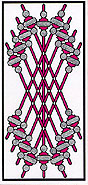 | The first card, the significator, is placed in the center of the cross. This card represents the prime energy manifest in your life. Nine of Wands (Strength): A pause in the current struggle to ready oneself. Preparation to meet the final conclusive onslaught. Forces assembled in anticipation of trials and tribulations. The steeling of the will to stand or fall. A line drawn in the sand. |
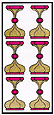
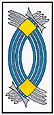
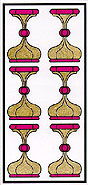 | The second card, placed above the significator, represents Air. It describes your spirit, process of thought, and the influence of reason. Six of Cups (Pleasure), when reversed: Closing your heart to the simple pleasures of life. Escaping realities by living in the past. Refusal to grow up and embrace the joys of adulthood. Contempt for acts of gentle kindness. May indicate immaturity or sexual insecurities. May indicate the departure of an old friend. |
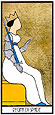
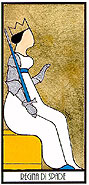 | The third card, placed to the right of the significator, represents Fire. It describes your motivations, creative energies, and the influence of passion. Queen of Swords: The essence of air behaving as water, such as a refreshing mist: A person gifted with both keen logic and natural intuition, giving them uncanny powers of perception and insight. One who easily sees past deception and confusion to the heart of a matter, and understands both sides of any argument. The embodiment of calm, forthrightness, and wit, in the face of even the most trying circumstances. |
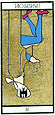
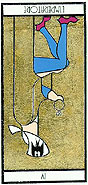 | The fourth card, placed below the significator, represents Water. It describes your emotions, meditations, and the influence of love. The Emperor, when reversed: Weakness in character leading to tyranny and abuse of worldly power. Loss of confidence and ambition, coupled with the cold execution of the unthinkable. The inability to carry out plans or command respect. Being unreasonable and prone to fits of rage. A deceiver or demagogue. |
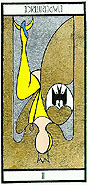 | The fifth card, placed to the left of the significator represents Earth. It describes your physical presence, position in life, and the influence of the material world. The Empress, when reversed: Stifling matriarchal influence. Unhappiness, selfishness, poverty and disruption of the home or family. Indecision, paranoia, and jealous rage. Sterility. |
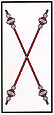
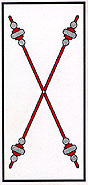 | At this point the cross is complete and the triangle is formed. The sixth card, placed on the bottom left of the triangle represents one of two opposing forces. Two of Wands (Dominion): Established power and influence over others. Setting goals and a vision for the future. Coming to grips with the impact of past decisions, considering the current state of affairs, and developing a plan of action. Responsible leadership. |
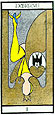
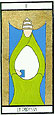
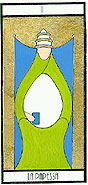 | The seventh card, placed on the bottom right of the triangle represents the force that opposes the bottom left card. These forces may be external, but they are frequently one's own inner archetypes in conflict. The High Priestess: A pure, exalted and gracious influence. Education, knowledge, wisdom, and esoteric teachings. The forces of nature. Intuition, foresight, and spiritual revelation of the most mysterious and arcane sort. |
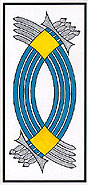 | The eighth card, the reconciler, is placed below the cross in the third vertex of the triangle. This is the force that will resolve the conflict between the bottom left and bottom right cards. By meditating on this force and bringing more of it into your life, you can bring the matter at hand to a swifter conclusion than would naturally occur. Eight of Swords (Interference), when reversed: Learning a valuable lesson from the unexpected consequences of prior decisions. Narrowly escaping criticism, censure, and the imposition of external restrictions. Focusing on the crux of a problem and freeing oneself from a difficult situation. Coming to grips with a past failure or humiliation and moving on. |
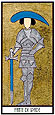
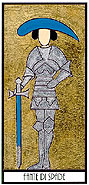 | The ninth and final card, placed in the center bottom of the triangle, represents the final outcome unless you change course. Page of Swords: The essence of air behaving as earth, such as a steady wind: The approach of an unexpected challenge, to be met with clear thought and just action. A person filled with an eager appetite for all matters of mind and logic. The gathering of information through unfaltering vigilance, careful examination, and subtle spycraft. The use of reason or eloquent speech to penetrate the veil of confusion and cut to the heart of the matter. |
|
|