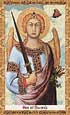
Today's Tarot for Paul Newman
| The Shadow Truth spread provides insight into your attitudes and hidden feelings. This spread is used when you are having trouble confronting something, or fear that you are concealing something from yourself. The Golden Tarot is a modern celebration of late medieval artwork. This deck is the choice of scholars, for it evokes images of elegance amid barbarism, and the light of virtue in dark times. If you would like your own copy of the Golden Tarot, you can buy it now! |
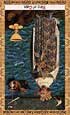
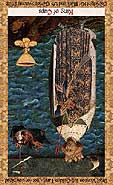 | The card in the center represents the attitude you assume. King of Cups, when reversed: The dark essence of water behaving as air, such as rain clouds in a gray sky: A pillar of maturity and patience, hiding a deep insecurity and an indecisive nature. One who secretly lusts for power, but lacks the courage, intellect, or work ethic necessary to take it. A charming seducer who appears innocent and understanding, but is in fact selfish and unfaithful. |
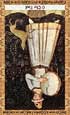
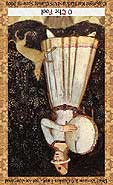 | The card to the right represents the thoughts and feelings that underly your attitudes. The Fool, when reversed: Apathy, negligence, and dangerous carelessness. Unquenchable wanderlust. Obsession with someone or something. Losing all sense of proportion. Foolhardy adventuring and lack of interest in critical matters. Immature or unrealistic ideals. Strange impulses and desires coming from unexpected sources. Vanity, delirium, folly, and oblivion. |
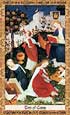
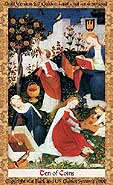 | The card at the top represents how your attitude is evolving and will evolve in the future. Ten of Coins (Wealth): Completion of material prosperity and riches. Freedom from financial anxiety, the security of home, and the enjoyment of family. The passing of inheritance along to children, or the gaining of inheritance from parents. |
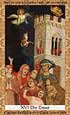
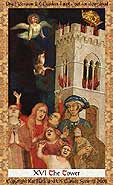 | The card to the left represents how others perceive your attitude. The Tower: Unforeseen catastrophe. An abrupt change, perhaps leading to a new lifestyle and enlightenment. May indicate a broken relationship, divorce, or failure in business or career. |
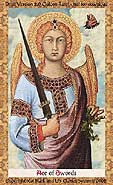 | The card at the bottom represents what you cannot confront or are hiding from yourself. Ace of Swords: The seed of victory - perhaps as yet unseen. A challenge to be met and solved through the invocation of force. An opportunity to bring reason and intelligence to bear in the pursuit of justice and truth. An excessive power that must not be abused. May suggest new ideas or information that can reveal a solution to the problem at hand. |
|
|