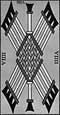
| The Celtic Cross spread is one of the most popular Tarot spreads, providing varied insight into many aspects of a complex situation and your role in it. The Marseilles Tarot is an 18th century creation of obscure origins. It predates the occult symbolism of the Rider Waite deck by roughly 200 years, giving the readings a unique and rustic flavor. Many swear by this deck as the true oracle of the common man. If you would like your own copy of the Marseilles Tarot, you can buy it now! |
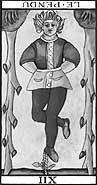 | The card not shown but at the center of the cross, represents the atmosphere surrounding the central issue. Le Pendu (The Hanged Man), when reversed: Life in suspension. Selfish, materialistic, and untrusting attitudes. Unwillingness to make necessary sacrifices. Going along with the crowd, and refusing to hear the inner voice. Concessions and appeasements that backfire. |
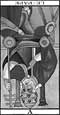
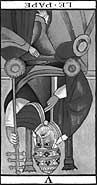 | The card visible at the center of the cross represents the obstacle that stands in your way - it may even be something that sounds good but is not actually to your benefit. Le Pape (The Pope), when reversed: Authoritarianism. Inflexible and dogmatic thinking. A calcified old regime. Bad or incompetent advice. Inability to hear a higher or inner voice, or pretending to hear it for personal gain. |
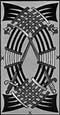
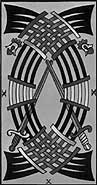 | The card at the top of the cross represents your goal, or the best you can achieve without a dramatic change of priorities. Ten of Swords (Ruin): Crushing defeat brought about by idle intellectualism divorced from reality. Sadness and desolation in the aftermath of a catastrophic and total collapse. A decisive conclusion brought about through the swift and merciless application of overwhelming force. |
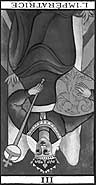 | The card at the bottom of the cross represents the foundation on which the situation is based. L'Imperatrice (The Empress), when reversed: Stifling matriarchal influence. Unhappiness, selfishness, poverty and disruption of the home or family. Indecision, paranoia, and jealous rage. Sterility. |
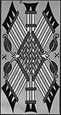
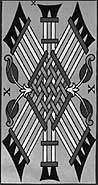 | The card at the left of the cross represents a passing influence or something to be released. Ten of Batons (Oppression), when reversed: Refusing to take on burdens greater than you can carry. Noble leadership restrained from transforming into tyranny. Bearing the weight of ultimate responsibility without being crushed. Through careful conservation of their fuel, the engines of creation continue onward. |
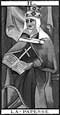
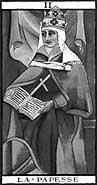 | The card at the right of the cross represents an approaching influence or something to be embraced. La Papesse (The Popess): A pure, exalted and gracious influence. Education, knowledge, wisdom, and esoteric teachings. The forces of nature. Intuition, foresight, and spiritual revelation of the most mysterious and arcane sort. |
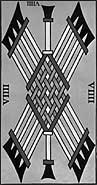 | The card at the base of the staff represents your role or attitude. Nine of Batons (Strength), when reversed: Delayed preparations for an impending trial. Efforts compromised by traitors or saboteurs. The scattering of forces before the conclusive battle is fought. Ill health and faltering of the will. |
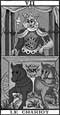
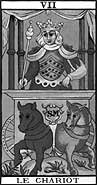 | The card second from the bottom of the staff represents your environment and the people you are interacting with. Le Chariot (The Chariot): Victory through might. Advancement through bold action. Change through force. Order established through vigilance. A trying situation mastered by balancing opposing forces against each other. Discipline, individual effort and endurance will turn the tide. |
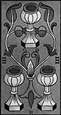
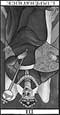
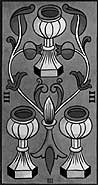 | The card second from the top of the staff represents your hopes, fears, or an unexpected element that will come into play. Three of Cups (Abundance): A time of merriment and reflection spent in the company of friends and loved ones. The conclusion of a matter in plenty and perfection. The strength of a diverse community being brought together. May suggest a celebration, festival, anniversary, wedding, baby shower, or other joyous gathering. |
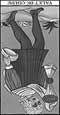
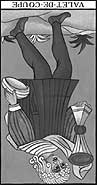 | The card at the top of the staff represents the ultimate outcome should you continue on this course. Valet de Coupe (Page of Cups), when reversed: The dark essence of water behaving as earth, such as a wellspring: An unexpected new relationship that is childish and foolish. An idle dreamer oblivious to the realities of the world. Moodiness, sad reflection, and retreat from society. Seduction and deception in personal and business relationships. |