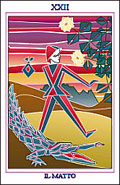
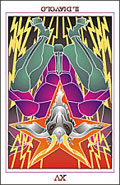
| The Celtic Cross spread is one of the most popular Tarot spreads, providing varied insight into many aspects of a complex situation and your role in it. The Palladini Tarot was created to "bridge the ancient and the future", using elements of Medieval, Egyptian and modern art. It is one of the most popular decks among new students of Tarot. If you would like your own copy of the Palladini Tarot, you can buy it now! |
 | The card not shown but at the center of the cross, represents the atmosphere surrounding the central issue. The Hanged Man: Pausing to reflect. Surrendering to an experience. Adjusting to new ideas through sacrifice. Opening oneself to intuition and enhanced awareness. Letting go of past patterns and growing beyond them. Inner peace, faith, and serenity. |
 | The card visible at the center of the cross represents the obstacle that stands in your way - it may even be something that sounds good but is not actually to your benefit. Nine of Pentacles (Gain): Good luck attending material affairs. Attaining refinement and embracing elegance. Discipline and nobility applied to the maintenance of security and stability. The wise use of resources and foresight. The fulfillment that comes with accomplishment, and the turning of attention to higher things. |
 | The card at the top of the cross represents your goal, or the best you can achieve without a dramatic change of priorities. The Judgment: A swift and conclusive decision. The resolution of a matter long unanswered. A change in point of view, most frequently towards greater enlightenment. Final balancing of karma. |
 | The card at the bottom of the cross represents the foundation on which the situation is based. The Chariot: Victory through might. Advancement through bold action. Change through force. Order established through vigilance. A trying situation mastered by balancing opposing forces against each other. Discipline, individual effort and endurance will turn the tide. |
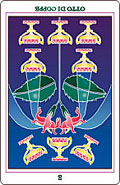
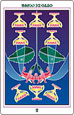
 | The card at the left of the cross represents a passing influence or something to be released. Nine of Cups (Happiness), when reversed: Vanity, conceit, and smugness in romance, friendship, or other relationships. Achieving what you always thought you wanted. Overindulging in food, drink, or the pleasures of the flesh. A state of joy and abundance that is shallow and fleeting. |
 | The card at the right of the cross represents an approaching influence or something to be embraced. Seven of Cups (Temptation): Daydreams and things seen in the glass of contemplation. The scattering of energies by strong desires and unrealistic goals. The pursuit of illusions and the dissipation of energy on false choices. Intoxication, delirium, and hallucination, leading to the negation of effort. Under rare and extreme circumstances, may indicate the revelation of transcendental spiritual truth. |
 | The card at the base of the staff represents your role or attitude. Seven of Swords (Futility): An opportunity to withdraw from a hopeless situation and fight another day. Disengagement from a struggle you should never have been involved in. A desperate attempt to resolve a matter without conflict. The use of cleverness or outright deception to turn the tide in your favor. |
 | The card second from the bottom of the staff represents your environment and the people you are interacting with. Temperance, when reversed: Lack of restraint and self-control. Losing one's cool. Energies dispersed through conflicts in personal, business, and spiritual matters. |
 | The card second from the top of the staff represents your hopes, fears, or an unexpected element that will come into play. Nine of Swords (Cruelty), when reversed: Mental anguish or ill health endured and overcome. Refusal to be dragged down by the dishonor of others. Attempting to avert a shameful or regrettable act. Faithfulness, patience and unselfishness. May indicate the narrow avoidance of a death or other catastrophic loss. |
 | The card at the top of the staff represents the ultimate outcome should you continue on this course. Two of Rods (Dominion): Established power and influence over others. Setting goals and a vision for the future. Coming to grips with the impact of past decisions, considering the current state of affairs, and developing a plan of action. Responsible leadership. |