| The Celtic Cross spread is one of the most popular Tarot spreads, providing varied insight into many aspects of a complex situation and your role in it. The William Blake Tarot explores the mystical vision and artistry of the renowned English painter and poet. Through rich interpretations focused on creative undertakings, it has long been the deck of choice for artists, writers, musicians, and thinkers. For more information about this deck, or to buy your own personal copy, go to www.blaketarot.com.
|
 | The card not shown but at the center of the cross, represents the atmosphere surrounding the central issue. Angel of Painting: "The Graphic Muse". Visionary reverie. Coalescing plans and agendas in your imagination. Contemplation prior to action. Making use of appropriate tools. Getting an overview of the situation, particularly regarding its physical or material aspects. "Getting the feel" of things. In the creative process: Look for or contemplate a solid idea, a practical point of view that can instigate a whole new direction in your work or project. |
 | The card visible at the center of the cross represents the obstacle that stands in your way - it may even be something that sounds good but is not actually to your benefit. Woman of Poetry, when reversed: Shameless self-promotion. False generosity and glory-hounding. Creating drama for the sake of drama. Undue need to inspire others and take on the role of leader. In the creative process: With complete confidence in your expressive abilities, you serve as a guiding light to inspire growth and confidence in others. |
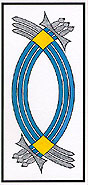
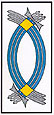
 | The card at the top of the cross represents your goal, or the best you can achieve without a dramatic change of priorities. Five of Science (Division), when reversed: Meeting an overwhelming problem by focusing on its' component parts. Cutting yourself loose from mental hang-ups and personal entanglements. The ability to keep things separate in your mind, and to avoid conflict of interest. Swift action when faced with an impossible choice. Possibility for a new outlook. In the creative process: Caught in your own net of plans or scheme. Divide the problem into smaller segments for greater freedom of action. |
 | The card at the bottom of the cross represents the foundation on which the situation is based. Two of Science (Reflection), when reversed: Hesitating before opportunity. Dilemma. Uncertain whether to stay put or go on. Waiting for something to happen. Denying your feelings. In the creative process: An uneasy decision about which way to proceed, perhaps between a rational versus intuitive approach. Weigh the potential rewards versus the possible dangers. |
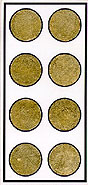
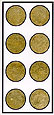
 | The card at the left of the cross represents a passing influence or something to be released. Five of Painting (Hardship): Tangible difficulties, insecurity, or financial worries. Possible material losses, pain, or illness. Accusations and criticism, or blame from others. Exclusion. Suffering. Issues of support, loyalty, or companionship in hard times. In the creative process: Realize that the problems you are trying to solve may put you at odds with others who do not recognize your value. Be ready to grapple with personal blocks and fears, and to hear more from your inner voice than reasons why things won't work. |
 | The card at the right of the cross represents an approaching influence or something to be embraced. Seven of Science (Lamentation): Psychic energy restrained. Feeling burdened with heavy thoughts. Pushing yourself too hard. Wallowing over and refusing to accept the situation. Straining against something. In the creative process: When you are feeling stuck or blocked, push your imagination to find a way around the problem; rely on your energy and hard work. |
 | The card at the base of the staff represents your role or attitude. Child of Painting, when reversed: Being carried astray by a wave of prosperity. Relying on your innate tendencies to the exclusion of acquired sense and skills. Inability to leave a position of material advantage. Hedonistic enjoyment. Drug experimentation. Surfing the Internet. Total absorption in your activities. Being ruled by your body and instincts. Obsession with new experiences. In the creative process: Now is a time to experiment with processes and materials, taking great pleasure in what you learn and create. |
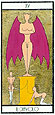
 | The card second from the bottom of the staff represents your environment and the people you are interacting with. Angel of Music: "Like as an angel glitt'ring in the sky, / In times of innocence and holy joy: / The joyful shepherd stops his grateful song. / To hear the music of an angel's tongue". A surge of passionate emotion. A call for compassion in the situation. A need to rise above a mundane or materialistic milieu. Possibility of being granted a favor or indulgence. An unexpected emotional influence. Emerging impulse to personal transformation. Development of appropriate aesthetic sensibility. Intuitive awareness of public needs or the mass media. In the creative process: An inrush of excitement or appearance of a new factor offers alternative possibilities for your work. |
 | The card second from the top of the staff represents your hopes, fears, or an unexpected element that will come into play. Four of Poetry (Harmony), when reversed: Things refuse to come together. Achievements or personal successes go unrecognized. What was sown cannot be reaped. Discord among friends and family. Inability to working together with a partner or share a special experience. In the creative process: The various elements and personalities involved in your project are interacting harmoniously, generating an appropriate sense of gratitude for what has been accomplished so far. |
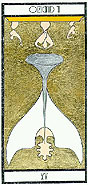
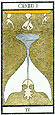
 | The card at the top of the staff represents the ultimate outcome should you continue on this course. Eternity, when reversed: The intervention of transcendent forces in the everyday world. The great are brought low and the petty are elevated. Obsession with the passage of time and the immanence of death. Being overwhelmed by the repetition of evil and mediocrity, and withdrawing from the world. Cynicism and nihilism driven by regret over past mistakes. |