| The Relationship spread provides insight into the interaction between two people or entities. It is the spread of choice for questions about partnerships, be they in romance or business. The International Icon Tarot renders traditional occult symbolism in Swiss iconography. It is a humorous and direct approach to divination, and one of our favorite new decks. If you would like your own copy of the International Icon Tarot, you can buy it now!
|
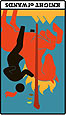
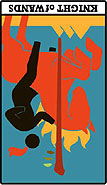 | The card at the top left represents how you see yourself. Knight of Wands, when reversed: The dark essence of fire, such as a great conflagration: One filled with vitality and limitless appetite. A sexy and exciting person, obsessed with style and outward appearance, overconfident in their abilities, and foolhardy in their actions. A hot temper and domineering nature, coupled with a love of false drama and all things theatrical. Anxiety over remaining in one place or with one person for too long. The rapid approach, or more likely departure, of someone or something that ruptures your world. Often suggests travel as the result of discord, or cruel indifference. |
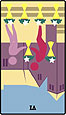
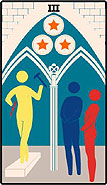 | The card at the top right represents how you see your partner. Three of Pentacles (Works): The commencement of business, commercial transactions, or employment. The constructive use of creative talents, and the expression of artistry in workmanship. Skill and labor turned to the crafting of things of value. Using the conventional as a medium for expressing the exceptional, in order to build something of great renown and glory. |
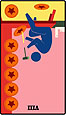
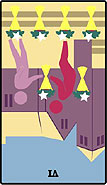 | The card in the center left represents how you feel about your partner. Six of Cups (Pleasure), when reversed: Closing your heart to the simple pleasures of life. Escaping realities by living in the past. Refusal to grow up and embrace the joys of adulthood. Contempt for acts of gentle kindness. May indicate immaturity or sexual insecurities. May indicate the departure of an old friend. |
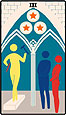
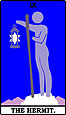
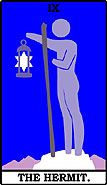 | The card in the center right represents what stands between you and your partner. The Hermit: Withdrawal from events and relationship to introspect and gather strength. Seeking the inner voice or calling upon vision from within. A need of understanding and advice, or a wise man who will offer knowing guidance. Personal experience and thoughtful temperance. |
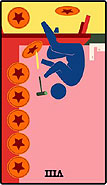 | The card in the lower left represents how your partner sees you. Eight of Pentacles (Prudence), when reversed: Undue attention to small details at the expense of the big picture. Losing yourself in your work, to the detriment of your personal and spiritual life. Making the same mistake repeatedly. Refusing to learn new crafts or skills. |
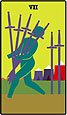
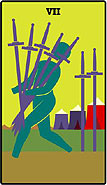 | The card in the lower right represents what your partner feels about you. Seven of Swords (Futility): An opportunity to withdraw from a hopeless situation and fight another day. Disengagement from a struggle you should never have been involved in. A desperate attempt to resolve a matter without conflict. The use of cleverness or outright deception to turn the tide in your favor. |
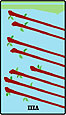
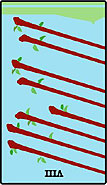 | The card in the center represents the present status or challenge of the relationship. Eight of Wands (Swiftness), when reversed: Too much force applied too suddenly. A flash in the pan. A foolhardy and untimely plunge into the unknown. Impatience leading to poor decisions in love, business, travel, or spiritual growth. |